Requirements
Passport Photo Sizes by Country: 2026 Table
Passport photo size by country in mm, inches and pixels, with head heights and backgrounds. Ten authorities, every figure checked on the official page.

By Antoine Duno
Updated September 19, 202615 min read
Specs verified on September 16, 2026 against the issuing authority
There is no international passport photo size. There is a widely copied ICAO-shaped rectangle, two large countries that ignore it, and a growing group of authorities that have stopped publishing a size in millimetres at all because they only accept digital files now.
This page collects the figures for ten authorities, each one taken from the issuing government's own page. Where we could not verify a country, it is not in the table. A short list of accurate rows is worth more than a long list of guesses.
- 35 x 45 mm
- UK, India, Ireland, Schengen visas, small end of Australia
- 2 x 2 in (51 x 51 mm)
- United States passports and visas
- 50 x 70 mm
- Canada, and nowhere else
- Digital only, no printed size
- Germany, New Zealand, Singapore
- Tightest recency rule
- United Kingdom - 1 month
- Most prints required
- Ireland - 4 identical photos
The master table
Printed sizes, head heights and backgrounds, as published by each authority. Every row links to the source at the bottom of this page.
| Country / document | Printed size | Head or face height | Background | Prints | Max age |
|---|---|---|---|---|---|
| United States passport | 2 x 2 in (51 x 51 mm) | 1 to 1 3/8 in (25-35 mm), chin to top of head | White or off-white | 1 | 6 months |
| United States visa and DV entry | 2 x 2 in (51 x 51 mm) if scanned | 50-69% of image height | White or off-white | Digital entry | 6 months |
| United Kingdom passport | 45 mm high x 35 mm wide | 29-34 mm, chin to crown | Cream or light grey (printed) | 2 | 1 month |
| Canada passport | 50 mm wide x 70 mm high | 31-36 mm, chin to crown | White or light-coloured | 2 | 6 months |
| Australia passport | 35-40 mm wide x 45-50 mm high | 32-36 mm, chin to crown | White or light grey | 2 | Under 6 months |
| India passport (DPC/SPC/CSC) | 4.5 cm x 3.5 cm (45 x 35 mm) | Not specified in mm | Plain white | 1 | Recent |
| Ireland passport (paper) | Min 35 x 45 mm, max 38 x 50 mm | Not specified in mm | Plain, per pose guidelines | 4 | 6 months |
| New Zealand passport | Not published - digital only | Not specified in mm | Plain, light-coloured | Digital | 6 months |
| Singapore passport | Not published - digital photo | Not specified in mm | Per ICA guidelines | Digital | 3 months |
| Germany passport and ID | Not published - digital only | Face 70-80% of photo height | Plain, contrasting, shadow-free | Digital | Not specified |
| Schengen visa (German missions) | 35 x 45 mm | Face 70-80% of photo height | Plain, light | Usually 1 | Varies by consulate |
Those "not specified" entries are not gaps. They are the actual state of the published rules, and knowing which countries have stopped giving a millimetre figure saves you hunting for one that does not exist.
Sizes in inches and pixels
These conversions are arithmetic, not official requirements. No authority we read publishes a DPI figure for a printed passport photo except the US State Department, which asks for 300 pixels per inch when you scan an existing 2 x 2 inch print for a visa application.
| Printed size | In inches | At 300 DPI | At 600 DPI |
|---|---|---|---|
| 51 x 51 mm (2 x 2 in) | 2 x 2 | 600 x 600 px | 1200 x 1200 px |
| 35 x 45 mm | 1.38 x 1.77 | about 413 x 531 px | about 827 x 1063 px |
| 38 x 50 mm | 1.50 x 1.97 | about 449 x 591 px | about 898 x 1181 px |
| 40 x 50 mm | 1.57 x 1.97 | about 472 x 591 px | about 945 x 1181 px |
| 50 x 70 mm | 1.97 x 2.76 | about 591 x 827 px | about 1181 x 1654 px |
Note how small a 35 x 45 mm photo is at 300 DPI: 413 x 531 pixels, well below what several online systems demand. Uploading a print-sized crop to the UK online service, which needs at least 600 x 750 pixels, is one of the most common upload failures there is.
Digital specifications, where they exist
These are the rules that matter when a form is rejecting your file. They are separate from the printed sizes above, and they are not conversions of them.
| System | Pixels | File size | Format |
|---|---|---|---|
| US visa / DV entry | 600 x 600, square | 240 kB or less | JPEG |
| US passport online renewal | Not specified; you crop in the application | 54 KB to 10 MB | JPG, JPEG, PNG, HEIC, HEIF |
| UK passport online | At least 600 wide x 750 tall | 50 KB to 10 MB | Not specified |
| Ireland passport online | At least 715 wide x 951 tall | 9 MB or less | JPEG |
| Canada online renewal | 1200 x 1800 min, 3000 x 4500 max | 200 KB to 5 MB | JPEG |
| New Zealand passport | 900-4500 wide, 1200-6000 tall, 3:4 ratio | 250 KB to 5 MB | JPG or JPEG |
| Singapore ICA e-Services | 400 x 514 recommended | Up to 8 MB | JPG, JPEG, HEIC, HEIF, PNG |
Our passport photo size in pixels guide goes deeper on converting between these and on the extra rules — colour depth, compression ratio, eye height — that sit behind the headline numbers.
Four families of passport photo size
The 35 x 45 mm family
The UK, India, Ireland and Schengen visa applications all use a 35 mm wide by 45 mm tall rectangle, and Australia's range starts here too. It derives from the ICAO travel document standard and is what a European photo booth produces by default.
Within the family the details still diverge. The UK wants a printed background that is cream or light grey, specifically not white. India wants plain white and dark clothing for contrast. Ireland accepts prints up to 38 x 50 mm and wants four of them. Same rectangle, four different applications.
The 2 x 2 inch square
The United States is the outlier that most people meet first. A US passport photo is 2 x 2 inches (51 x 51 mm), square, with the head measuring 1 to 1 3/8 inches (25 to 35 mm) from the bottom of the chin to the top of the head, on a white or off-white background, taken within the last six months. You submit one print with a paper application.
US visa photos, including Diversity Visa entries, use the same square shape expressed digitally: 600 x 600 pixels, JPEG, 240 kB or less, with the head between 50% and 69% of the image height. The full rules are in our US passport photo requirements and DV lottery photo requirements guides, the visa form upload in DS-160 photo requirements, and what to do when that form refuses your file in DS-160 photo upload errors.
Canada's 50 x 70 mm
Canada uses a print 50 mm wide by 70 mm high, with the face 31 to 36 mm from chin to crown, and requires two identical prints taken within six months. Nothing else uses this size, so a Canadian photo cannot be recycled and no other country's photo can be cut down to fit. Canada also attaches the strictest sourcing rule of any country here, which we come back to below and cover fully in our Canada passport photo requirements guide.
The percentage family
Germany, and German missions handling Schengen visas, express the framing as a proportion rather than a measurement: the face must occupy 70 to 80 percent of the photo's height, with 50 to 80 percent allowed for children. India's guidance for children under four asks for 80 to 85 percent. The US visa specification is also a percentage — 50 to 69 percent — describing a much looser crop.
Percentages travel better than millimetres: they still make sense when the photo is a file rather than a print.
Head height is the measurement that actually fails
Everyone remembers the print size. Almost nobody measures their face. The published windows, side by side:
| Country | Head or face height | As a share of the print height |
|---|---|---|
| United States | 25-35 mm (1 to 1 3/8 in) | 49-69% of 51 mm |
| United Kingdom | 29-34 mm | 64-76% of 45 mm |
| Canada | 31-36 mm | 44-51% of 70 mm |
| Australia | 32-36 mm | 71-80% of 45 mm |
| Germany / German Schengen missions | Face 70-80% of photo height | 70-80% |
Read the right-hand column and the incompatibility becomes obvious. A correctly framed Canadian photo puts the face at under half the frame height; an Australian one puts it at three-quarters. They are different pictures of the same person, not different crops of one file. It is also why trimming a print never works: trimming changes the denominator.
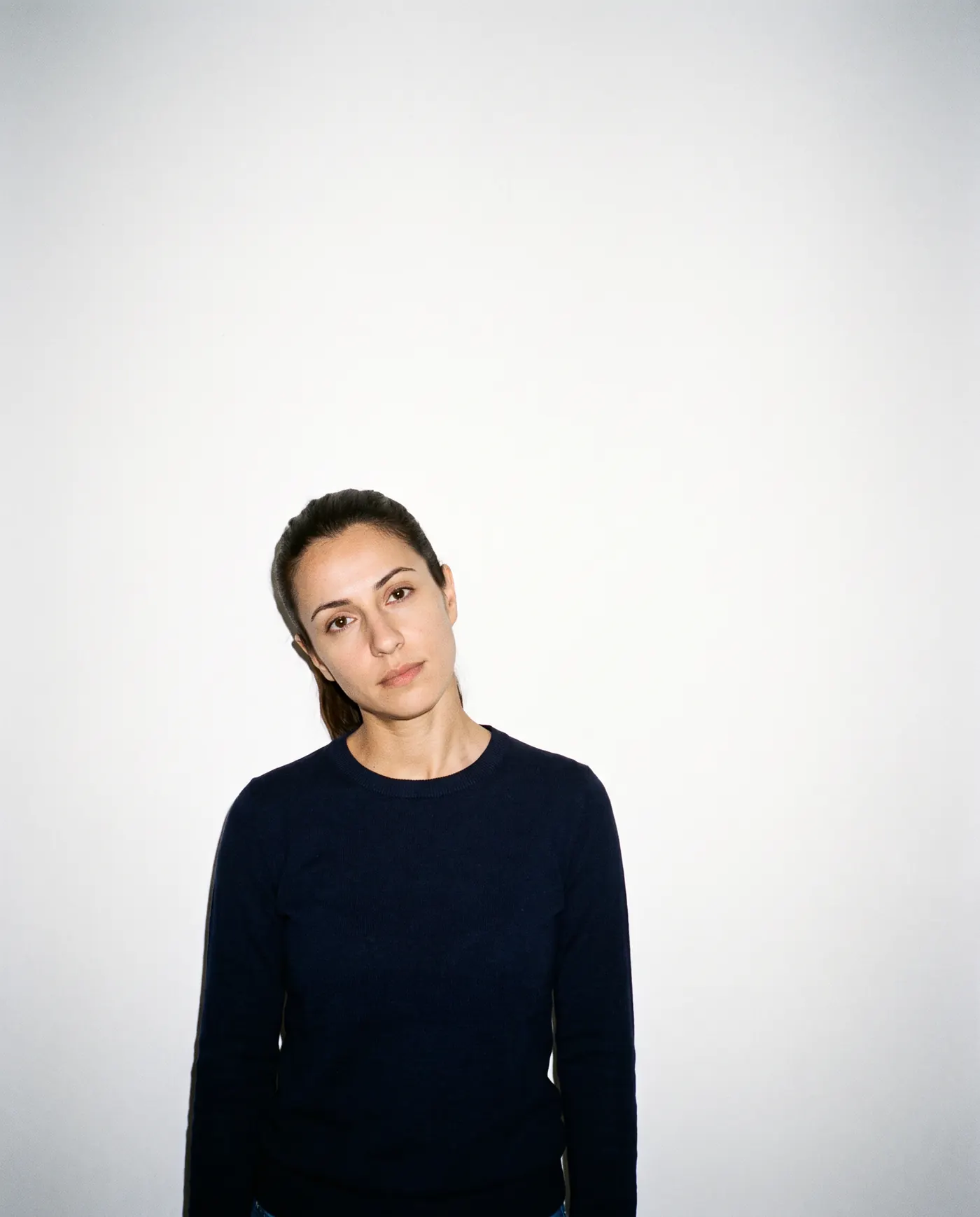 Rejected
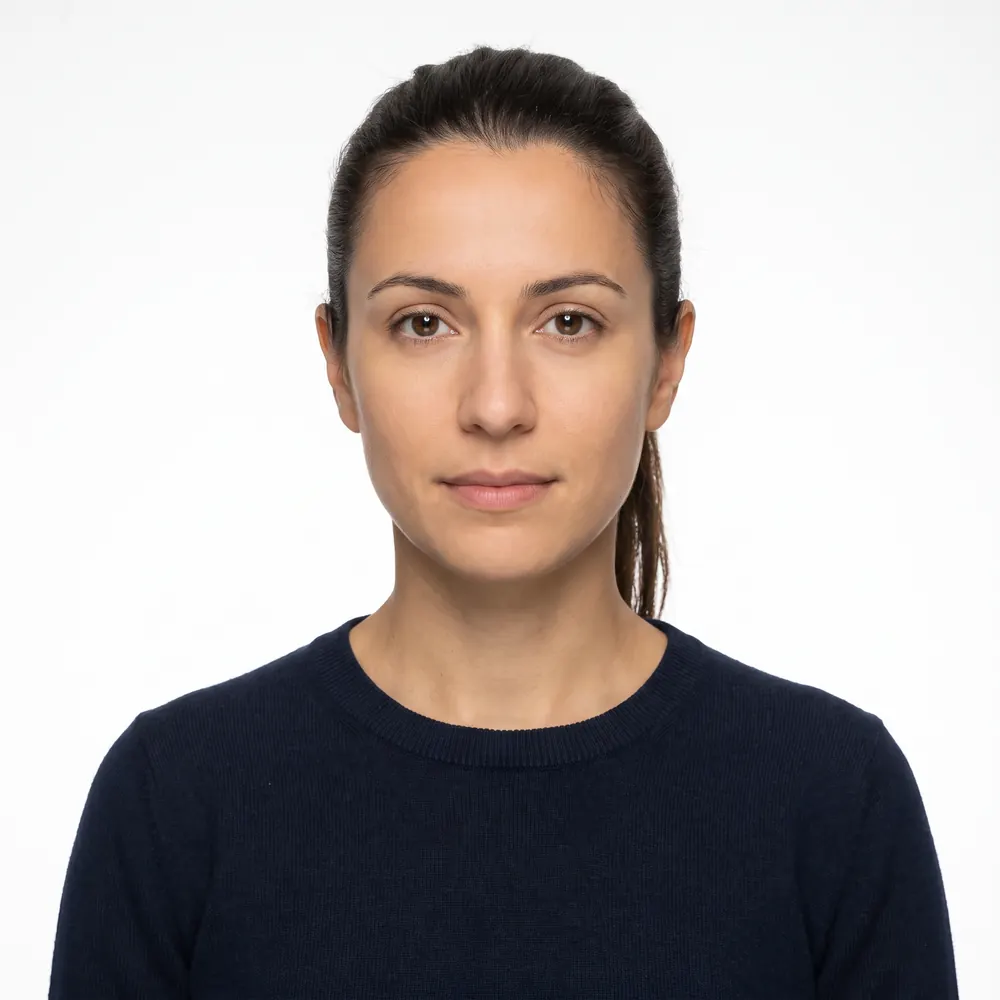 Accepted
Background colour is not universal either
| Country | Background |
|---|---|
| United States | White or off-white |
| United Kingdom (printed) | Plain cream or light grey |
| United Kingdom (digital) | Plain, light-coloured |
| Canada | Plain white or light-coloured |
| Australia | Plain white or light grey |
| India | Plain white, with dark clothing |
| New Zealand | Plain, light-coloured, strong contrast with the face |
| Germany | Plain, single colour, clear contrast with face and hair, shadow-free |
The UK printed rule is the one that catches people. GOV.UK asks for cream or light grey on printed photos, which is not the white background a US photo uses. Its photographers' guidance recommends a light grey of 5 to 10 percent. If you are applying to both, you need two photos. Our UK passport photo requirements guide has the detail.
Expression is the other silent divergence. The US allows a closed-mouth smile; the UK, Canada, Australia and the DV programme all require a neutral face. Our guide on whether you can smile in a passport photo runs through it authority by authority.
How recent does it have to be?
| Country | Maximum age |
|---|---|
| United Kingdom | 1 month |
| Singapore | 3 months |
| United States (passport, visa, DV) | 6 months |
| Canada | 6 months |
| Australia | Under 6 months |
| Ireland | 6 months |
| New Zealand | 6 months |
The UK's one-month rule is by far the tightest, and GOV.UK adds that you need a new photo for every new passport even if your appearance has not changed. If a renewal came back rejected, our guide on a rejected passport renewal photo covers the usual causes.
Countries where you cannot take your own photo
This is the section most size tables leave out, and it is more likely to derail an application than any measurement.
Canada. Photos must be taken in person by a commercial photographer or photo studio. Photos printed at home are not accepted. The back of the prints must carry the studio's name, complete address and the date. The digital photo used for online renewal must also come from a commercial photographer, saved directly from the original camera file, with scans rejected.
Germany. Since 1 May 2025, applications for German passports, identity cards, electronic residence permits and travel documents accept only digital biometric photos, produced either at the authority itself or by a registered photo service that transmits the image through a certified encrypted cloud. Paper photos were allowed under a transitional rule only until 31 July 2025. A photo you take at home cannot enter that pipeline at all.
Australia. The Passport Office recommends a professional passport photo provider and states that it does not recommend using an online passport photo service or a mobile app. Its print specification — dye sublimation, not inkjet, on glossy paper of at least 200 gsm — points the same way. See our Australia passport photo requirements guide.
India, at a Passport Seva Kendra. Not a restriction so much as a relief: Passport Seva's instruction booklet says a photograph is not required for applications submitted at a PSK or POPSK, because your image is captured at the centre. Photos are only needed for applications lodged at a DPC, SPC or other citizen service centre. Our India passport photo requirements guide explains which route needs what.
New Zealand and Singapore, by contrast, both support a photo taken by someone else on a phone, as long as it meets the file specification and is not a selfie.
How to use this table without getting burned
- 1
Identify the document, not just the country
A US passport photo and a US visa photo share a size but not a submission method. An Indian passport photo and an Indian e-Visa photo have nothing in common. Start from the form you are filling in.
- 2
Check whether you are allowed to take it yourself
This decides everything else. If the answer is no, the measurements are the photographer's problem, not yours - though measuring their print before you leave is still worth thirty seconds.
- 3
Measure the head, not just the print
Print size is easy and rarely wrong. Head height is the measurement that gets photos returned, and it is the one nobody checks.
- 4
Match the background colour exactly
White, off-white, cream and light grey are four different answers, and authorities do distinguish between them.
- 5
Never reuse a photo across applications
Different head windows, different backgrounds, different expression rules - and some programmes, like the DV lottery, treat a reused photo as grounds for ineligibility.
Rules that apply almost everywhere
For all the divergence, a handful of requirements show up in every specification we read:
- Face the camera directly, head straight and centred
- Eyes open and clearly visible, hair away from the eyes
- Even lighting with no shadows on the face or behind the head
- Plain, uncluttered background with clear contrast
- Natural skin tones, in focus, no red eye
- Nobody else and nothing else in the frame
- Retouching, smoothing, filters or AI edits
- Replacing the background with software
- Tinted or dark glasses of any kind
- Hats or head coverings, except for religious or medical reasons
- Photos cropped out of a group shot or copied from another document
The editing rule has hardened everywhere. Canada names photo editing software, filters and AI tools as grounds for rejecting an application. New Zealand says not to edit, filter or use AI tools to modify your appearance. Australia lists retouching and an edited background among its unacceptable examples. The DV instructions say a manipulated photograph may make you ineligible. Our guide to AI-edited passport photos works through what that means, and why passport photos get rejected covers the rest.
Countries we left out, and why
We deliberately did not publish figures for countries whose official pages we could not reach or read, even where the numbers are widely repeated elsewhere. Japan and China are the obvious absences: the commonly quoted figures may well be right, but we could not confirm them on the issuing ministry's own page on the day we checked.
Two entries in the table also carry caveats. Some Indian missions abroad publish a 2 x 2 inch specification that differs from Passport Seva's own 4.5 x 3.5 cm booklet, which we cover in the India guide rather than picking one for you. And there is no single Schengen photo page: the 35 x 45 mm ICAO standard is common ground, but recency, glasses rules and whether you need a print at all vary by member state, as our Schengen visa photo requirements guide shows with real consulate examples.
If you want a figure added, the bar is the same one we used here: a page published by the authority that issues the document.
Where our tool fits
We are an independent service, not connected to any government. We do the mechanical part: you upload a phone photo, we crop it to the size the authority publishes and check head height, tilt, background evenness, sharpness and exposure. We don't repaint backgrounds (the replace-background switch exists only for the two Indian formats), and we can't detect glasses or judge expression. You see the checks before you decide anything, and payment happens only at download — $4.99 for the digital file, $6.99 with a 4x6 print sheet, no subscription.
Where an authority requires a studio, as Canada does, or only accepts photos captured at the counter, as Germany now does, we say so on that country's guide instead of selling you a file you cannot use. For everywhere else, start at the home page, or read how to take a passport photo at home first.
Sources
- US Department of State - Passport photo requirements
- US Department of State - Digital image requirements for visa photos
- U.S. Embassy mirror - Diversity Visa Program instructions, Submitting a Digital Photograph
- GOV.UK - Photos for passports: printed photo requirements
- GOV.UK - Rules for digital passport photos
- Canada.ca - Photos for Canadian passports
- Australian Passport Office - Passport photos
- Passport Seva - Instructions for filling of passport application form (V3.0)
- Ireland.ie - Passport photo guidelines
- New Zealand Passports - Passport photos
- Immigration and Checkpoints Authority Singapore - Photo guidelines
- Bundesministerium des Innern - Vereinfachte Ausweisbeantragung ab Mai 2025
- Bundesdruckerei / BMI - Fotomustertafel: Qualitaetsmerkmale biometrischer Fotos fuer Dokumente
Frequently asked questions
What is the most common passport photo size?
The 35 x 45 mm rectangle is the most widely used. The UK, India, Ireland and Schengen visa applications all use it, and Australia accepts it at the small end of its range. The main exceptions are the United States at 2 x 2 inches and Canada at 50 x 70 mm.
Is a 2x2 inch photo the same as 35x45 mm?
No. A 2 x 2 inch photo is 51 x 51 mm and square. A 35 x 45 mm photo is a rectangle. You cannot trim one into the other, because the head-height rules are measured against the finished print and would no longer be met.
What size is a passport photo in pixels?
There is no single answer, because pixel rules belong to online systems, not to print sizes. US visa photos are 600 x 600. UK online photos are at least 600 x 750. Irish online photos are at least 715 x 951. Canadian online renewal runs from 1200 x 1800 to 3000 x 4500.
Which countries won't accept a photo I took myself?
Canada requires photos taken in person by a commercial photographer, including for online renewal. Germany has accepted only digital photos made at the authority or by a registered photo service since 1 May 2025. Australia recommends a professional provider and requires dye-sublimation prints.
How recent does a passport photo have to be?
It varies widely. The UK requires a photo taken in the last month. Singapore asks for one taken within the last three months. The United States, Canada, Australia, Ireland and the DV lottery all use six months.
Can I use one photo for several countries' applications?
Rarely. Even where two countries use the same print size, the head-height windows, background colours and expression rules usually differ. The UK wants cream or light grey printed backgrounds and no smile; the US wants white or off-white and allows a closed-mouth smile.
Keep reading
Passport Photo Size in Pixels: Digital Specs by Country
Passport photo size in pixels for online applications in the US, UK, Canada and India, plus how 2x2 in and 35x45 mm prints convert to pixels.
Read the guideRequirementsUS Visa and Immigration Photos by Form: 2026 Guide
Which US visa and immigration forms need your photo in 2026: DS-160 uploads, DS-260 prints, DV entries, USCIS forms and biometrics, in one sourced table.
Read the guideRequirementsDV Lottery Family Photos: Who Must Be on the Entry
DV lottery family photos: a separate photo for you, your spouse and every unmarried child under 21, who is exempt, and the omissions that void an entry.
Read the guideRequirementsWhy Passport Photos Get Rejected: 10 Real Causes
The ten reasons passport and visa photos really get rejected, the official rule behind each and the fix, plus specs for print, renewal and the DS-160.
Read the guideRequirementsIndia Passport Photo Size and Rules for 2026
India passport photo requirements from Passport Seva's own instruction booklet: 4.5 x 3.5 cm, plain white background, and when you need no photo at all.
Read the guideRequirementsDV Lottery Photo Rules: Don't Get Disqualified
DV lottery photo rules: a 600x600 JPEG under 240 kB, a separate photo per family member, and the reuse rule that makes an entry ineligible.
Read the guide