Requirements
Australia Passport Photo Requirements Explained
Australian passport photo rules: two prints, 35-40 x 45-50 mm, face 32-36 mm, 200 gsm dye-sublimation paper, and why the APO warns off photo apps.
By Antoine Duno
Updated September 19, 20269 min read
Specs verified on September 16, 2026 against the issuing authority
The Australian Passport Office publishes one of the most specific photo pages of any issuing authority. It tells you the paper weight. It tells you the printing technology. It tells you that wireless earbuds are not hearing aids. And it tells you, in one sentence most photo tools would rather you did not read, that it does not recommend using an online passport photo service or a mobile app.
We are an online passport photo service. We are going to quote that sentence anyway, and then explain what the rest of the page actually requires.
Every figure below comes from the Australian Passport Office's passport photos page on passports.gov.au, checked on the date shown. The APO decides whether a photo is acceptable, and says it may ask for a new one either when you lodge your application or while it is being assessed.
- Number of photos
- 2
- Width
- 35 mm to 40 mm
- Height
- 45 mm to 50 mm
- Face height (chin to crown)
- 32 mm to 36 mm
- Maximum age
- Less than 6 months
- Background
- Plain white or light grey, contrasting with your face
- Print method
- Dye sublimation - not inkjet
- Paper
- Heavy-weight glossy, minimum 200 gsm
- Expression (over 3)
- Neutral, eyes open, facing the camera
- Glasses
- Only with a medical reason
A size range, not a single size
Australia is unusual in giving you a window on both dimensions rather than one exact figure:
- Width: 35 to 40 mm
- Height: 45 to 50 mm
So a standard 35 x 45 mm print — the same format used for UK, Irish, Indian and Schengen photos — sits at the bottom corner of the allowed range and is perfectly acceptable. So does a slightly larger 40 x 50 mm print. What is not acceptable is trimming a print down to fit, because the third measurement is fixed:
Your face must be 32 to 36 mm from chin to crown. Crown means the top of the head, not the top of the hair.
That 4 mm window is the real constraint. In a 45 mm-tall print, a face at the bottom of the range fills about 71% of the height and one at the top about 80%. Photographers who do passport work have a template for it; general portrait photographers sometimes do not.
If you need to compare this against another country's format, our passport photo sizes by country table puts them side by side.
The print specification is the part home printers fail
Most countries say something vague about professional printing. Australia names the technology and the paper:
- Good-quality colour prints, produced using dye sublimation — the APO adds "i.e. not from an inkjet printer" in the same line.
- Printed on heavy-weight, glossy paper, minimum 200 gsm.
Dye sublimation is what photo kiosks, pharmacy printers and professional photo labs use. It lays continuous tone rather than sprayed dots, which is why the resulting print does not break up under the scanner that reads it. A consumer inkjet, however good its photo paper, is not a dye-sublimation printer.
This single requirement means an Australian passport photo has to be printed somewhere that does photo printing. The APO's own list of where to go is:
- Post offices
- Professional photographers
- Some large chain stores with printing facilities
- Many camera stores
- Some pharmacies and chemists
- Other established reputable businesses
Quality, lighting and the things that get photos rejected
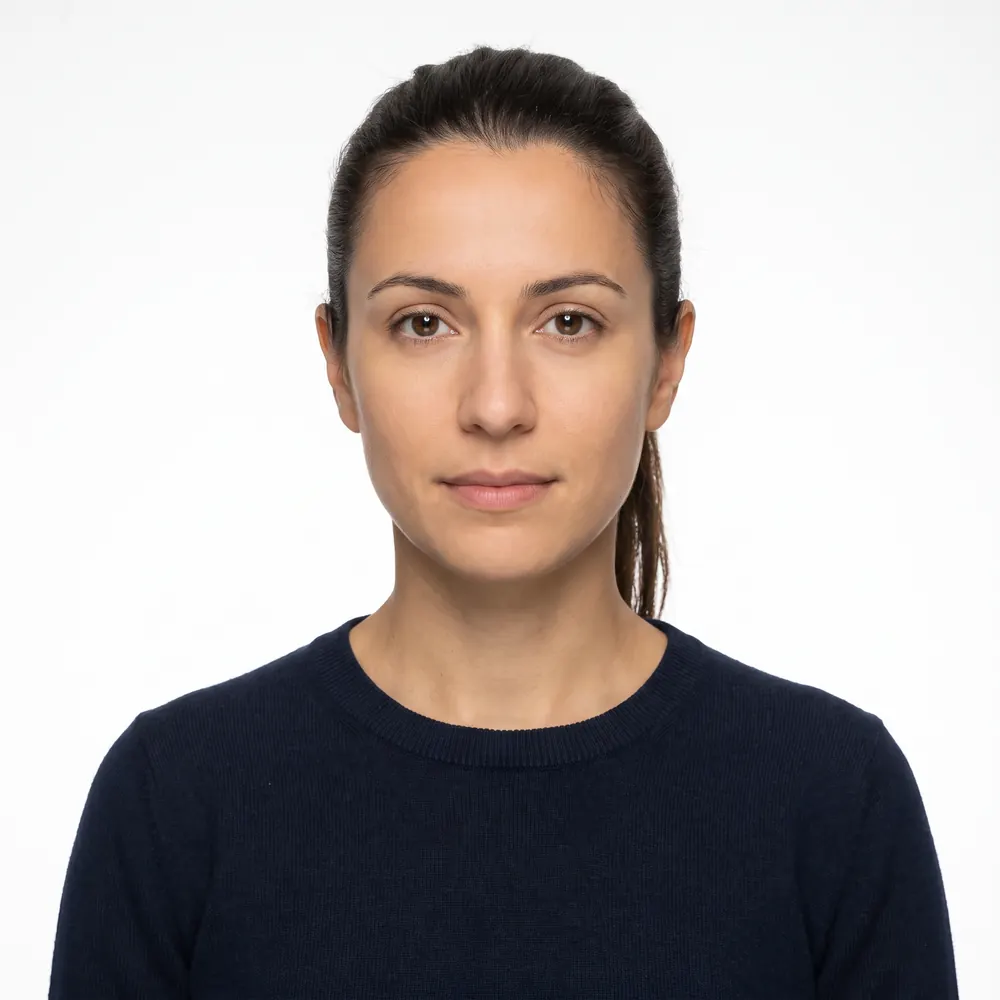
Your photos must have:
- A clear, in-focus image with no marks and no red-eye
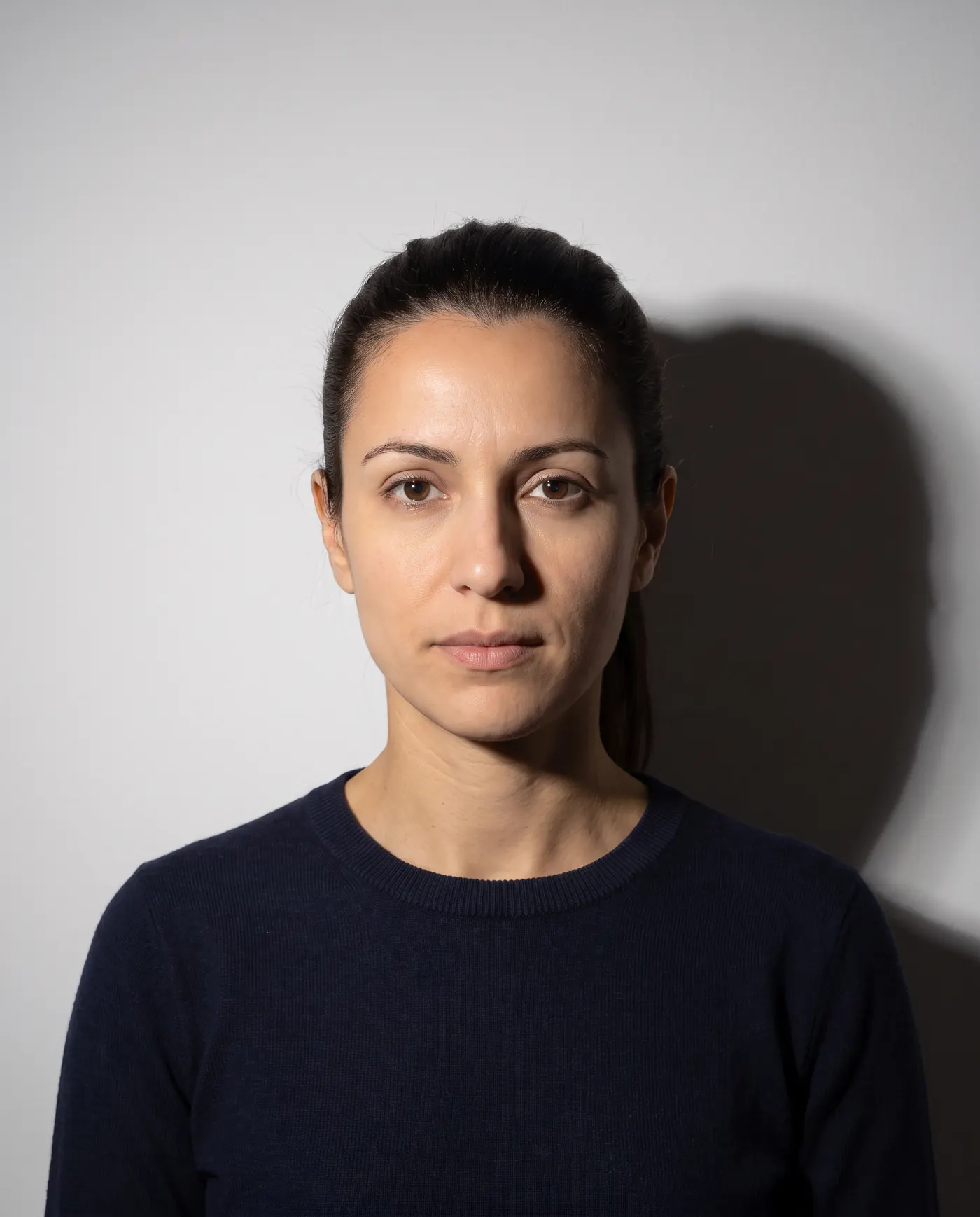
- A plain white or light grey background that contrasts with your face
- Uniform lighting with brightness and contrast that show your natural skin tone
- Your face centred and looking straight at the camera
- The edges of your face clearly visible
- Any retouching, such as removing moles, wrinkles or scars
- Shadows or reflections anywhere in the frame
- Your head tilted in any direction
- Hair obscuring the edges of your face
- A background that is not plain, or one that has been edited
- A grainy, blurred or reduced-resolution image
- Distortion from holding the camera too close
The last two come from the APO's own gallery of unacceptable examples, which also lists smiling, looking away, a head turned to the side, a hat, an object in the frame, a parent's hand, too much make-up, ink marks and uneven lighting.
Camera distance deserves a note. "Distortion - camera too close" is one of the APO's named rejection reasons. A phone held at arm's length enlarges the nose and forehead and shrinks the ears. Step back, shoot wider, and crop.
 Rejected
 Accepted
If your photo is for a visa rather than a passport, the rules are different: see Australia visa photo. Renewing an adult passport has its own page in Australian passport renewal photo.
Expression, and the under-3 exception
Anyone over 3 years old must face the camera straight on, with eyes open and a neutral expression. Smiling appears in the APO's unacceptable list, and so does a "subtle expression" — Australia means neutral quite literally.
For children under 3, the mouth may be open. The one absolute for children is that no one else can be visible in the photo, which rules out the hand steadying a head that shows up in so many infant photos.
Australia's no-smile rule is the opposite of the American one, where a closed-mouth smile is allowed. If you hold both passports, do not recycle a photo between them. Our guide on whether you can smile in a passport photo compares the rules country by country.
Getting Australian passport photos, step by step
- 1
Pick a provider from the APO's own list
Post offices, professional photographers, camera stores, large chain stores with printing facilities, and some pharmacies. Ask whether they print by dye sublimation on 200 gsm glossy paper.
- 2
Take off your glasses and your earbuds before you sit down
Glasses are only allowed with a medical reason, and wireless earbuds are not hearing aids. A hearing aid you normally wear is fine at any age.
- 3
Sit straight, look at the lens, hold a neutral face
Head not tilted in any direction, face centred, edges of your face clear of your hair. If you are over 3, mouth closed and no smile.
- 4
Check the two prints before you leave
Measure them: 35-40 mm wide, 45-50 mm high, face 32-36 mm chin to crown. Look for shadows behind your head, reflections from jewellery and any ink marks.
- 5
Get the guarantor endorsement if your application needs one
For a first passport, the guarantor writes 'This is a true photo of' plus your full name on the back of one photo and signs it in black pen. Renewals do not need a guarantor.
- 6
Keep the photos loose and flat
Do not attach them to the form or use a paperclip. Australian missions warn that clipping the photos can damage them.
Glasses, jewellery, head coverings and hearing aids
The APO gives each of these its own rule, and the details matter.
Glasses. You must not wear glasses unless you cannot remove them for medical reasons, and the page states that vision impairment alone is not an acceptable reason. If a medical reason applies, the frames must not obscure your eyes and there must be no reflection from the lenses.
Religious head coverings. Allowed if you usually cover your head for religious reasons. They must be plain, without patterns — even small patterns — and worn so that your entire face from the bottom of your chin to the top of your forehead, plus both edges of your face, remains visible. A patterned head covering appears in the unacceptable examples.
Jewellery and piercings. Permitted if you usually wear them, provided nothing obscures any part of your face, especially around the eyes, mouth and nose, and there is no reflection from any rings or studs.
Hearing aids. You can wear a hearing aid you normally use, at any age. The APO then adds a line that has clearly been written in response to real applications: AirPods and other wireless earbuds are not considered hearing aids and must be removed.
Medical exemptions. If a medical condition means you cannot meet the guidelines, you either provide a medical certificate or complete a B-11 form explaining why.
The guarantor endorsement
A first Australian passport application needs a guarantor or referee; the APO says you do not need one to renew a passport.
Where a guarantor is required, they do two things with your photos. They complete their section of the application form, and they endorse the back of one of your two photos. Australian missions describe the wording consistently: the guarantor writes "This is a true photo of" followed by your full name, and signs underneath, in black pen. The Australian Embassy in the Netherlands also asks applicants to write their own full name on the back of one photo, and warns not to attach the photos to the form or use a paperclip, which can damage them.
Check the instructions that come with your own application, since the endorsement wording is tied to the form.
What the APO says about photo apps
Here is the sentence, in full, from the passports.gov.au photo guidelines:
"We do not recommend using an online passport photo service or a mobile app. These may put you in danger of identity fraud."
It sits directly under the list of recommended providers. The concern it expresses is not about millimetres — it is about handing a biometric image of your face to a third party.
We are not going to argue with our own regulator's advice on somebody else's article. If you are applying for an Australian passport, the APO's position is that you should use a professional passport photo provider, and the print specification points the same way: you need dye-sublimation printing on 200 gsm glossy paper, which a provider has and you almost certainly do not.
Where our tool fits, honestly
There is still something useful we can do, and it is narrower than "make your Australian passport photo".
Checking. Bring the photo a provider gave you, or a test shot you took at home, and we will crop it to the Australian proportions, estimate your face height against the 32-36 mm window and check head tilt, background evenness, sharpness and exposure. It doesn't detect glasses, hair across the face or reflections. Checking is free and nothing is submitted anywhere.
Other documents. Australia's rules are unusually strict about who prints the photo. Most other authorities are not. If you need photos for a US, UK, Irish or Schengen application, our tool does the whole job, and you only pay at download: $4.99 for the digital file or $6.99 with a 4x6 print sheet, no subscription. Start at the home page.
We are an independent service, not connected to the Australian Passport Office or DFAT. We cannot lodge, track or speed up an application, and the APO makes the final decision on any photo.
Australian passport photo checklist
- Two photos, less than 6 months old
- 35-40 mm wide, 45-50 mm high
- Face 32-36 mm from chin to crown
- Plain white or light grey background, contrasting, no shadows
- Colour prints made by dye sublimation, not inkjet
- Heavy-weight glossy paper, at least 200 gsm
- Neutral expression and eyes open (mouth may be open under 3)
- Head straight, not tilted, face centred and looking at the camera
- No retouching of moles, wrinkles or scars
- No glasses unless medically necessary, with no reflection
- No earbuds; hearing aids are fine
- Religious head coverings plain and unpatterned, full face visible
- Guarantor endorsement on the back of one photo, where required
For the rules in neighbouring formats, see our UK passport photo requirements and Canada passport photo requirements guides, or the full list of reasons passport photos get rejected.
Sources
Frequently asked questions
What size is an Australian passport photo?
The Australian Passport Office asks for photos 35 to 40 mm wide and 45 to 50 mm high, with your face measuring 32 to 36 mm from chin to crown. You submit two photos with your application.
How many photos do I need for an Australian passport?
Two. The APO says you'll need to include two good-quality photos that meet all of its requirements. If your application needs a guarantor, that person endorses the back of one of them.
What background does an Australian passport photo need?
A plain white or light grey background that contrasts with your face. It must be free of shadows and reflections, and the edges of your face must be clearly visible against it.
Can I print an Australian passport photo at home?
Not on a normal home printer. The APO requires colour prints produced using dye sublimation, explicitly not inkjet, on heavy-weight glossy paper of at least 200 gsm. Almost no consumer printer meets that.
Can I wear glasses in an Australian passport photo?
Only if you can't remove them for medical reasons. The APO states that vision impairment alone is not an acceptable reason. If you must wear them, the frames must not obscure your eyes and there must be no reflection from the lenses.
Does the Australian Passport Office accept photo apps?
It advises against them. Its photo guidelines say it does not recommend using an online passport photo service or a mobile app, because these may put you in danger of identity fraud. It recommends a professional passport photo provider.
Can babies smile in an Australian passport photo?
Children under 3 may have their mouth open, so a natural expression is fine. Anyone over 3 must face the camera straight on with eyes open and a neutral expression. No one else may be visible in a child's photo.
Keep reading
Canada Passport Photo: 50x70mm and the Stamp
Canada passport photo rules: 50 x 70 mm, face 31-36 mm, two prints, and the studio stamp on the back that no app can replace. Verified on canada.ca.
Read the guideRequirementsUS Visa and Immigration Photos by Form: 2026 Guide
Which US visa and immigration forms need your photo in 2026: DS-160 uploads, DS-260 prints, DV entries, USCIS forms and biometrics, in one sourced table.
Read the guideRequirementsDV Lottery Family Photos: Who Must Be on the Entry
DV lottery family photos: a separate photo for you, your spouse and every unmarried child under 21, who is exempt, and the omissions that void an entry.
Read the guideRequirementsPassport Photo Sizes by Country: 2026 Table
Passport photo size by country in mm, inches and pixels, with head heights and backgrounds. Ten authorities, every figure checked on the official page.
Read the guideRequirementsWhy Passport Photos Get Rejected: 10 Real Causes
The ten reasons passport and visa photos really get rejected, the official rule behind each and the fix, plus specs for print, renewal and the DS-160.
Read the guideRequirementsIndia Passport Photo Size and Rules for 2026
India passport photo requirements from Passport Seva's own instruction booklet: 4.5 x 3.5 cm, plain white background, and when you need no photo at all.
Read the guide