How-to
DV Lottery Photo for a Baby: Newborns on the Entry
A baby on a DV lottery entry needs their own photo: same 600x600 JPEG, eyes open, no hands in frame. The rules, the lying-down setup and the edge cases.
By Antoine Duno
Updated September 23, 20269 min read
Specs verified on September 16, 2026 against the issuing authority
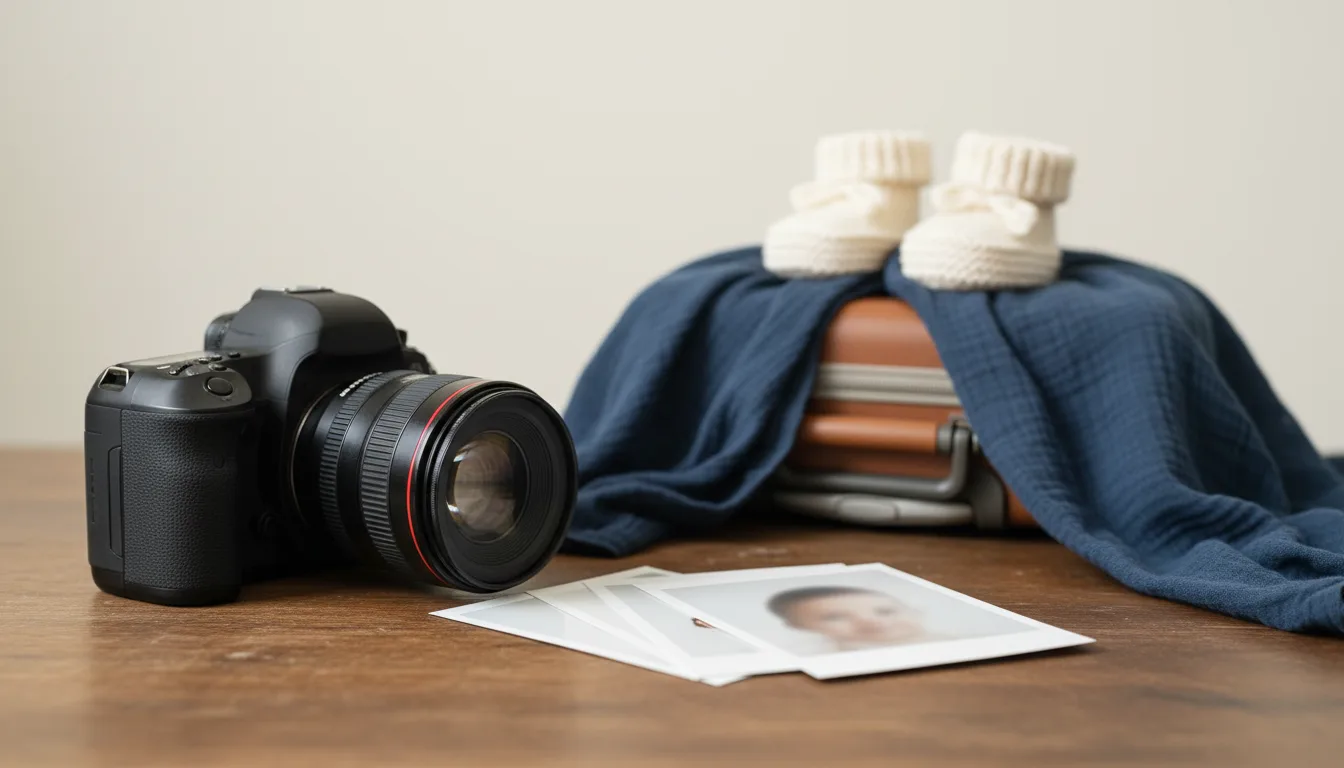
Every child on a Diversity Visa entry needs a photo of their own, and the instructions make no exception for age. A three-week-old baby follows the same specification as their parents: a square 600 x 600 JPEG, head filling half to two-thirds of the frame, eyes open, facing the camera, nobody else in the shot.
That is where habits from other documents cause trouble. Some photo rules for other documents make allowances for very young babies, and parents expect the same here: a sleepy newborn, a hand steadying the head. The DV instructions and the State Department's visa photo FAQ don't offer either.
These rules come from the Department of State's instructions for the DV-2026 program, the most recent full set published, read on an official U.S. embassy mirror, and the State Department's visa photo pages. The DV-2027 registration period has not been announced; the Department has said it will do so "as soon as practicable", and we don't guess dates.
- Photo required
- Yes, one individual photo per child
- Age exemption
- None
- File
- JPEG, 600 x 600 px, square, 240 kB max
- Maximum age of photo
- 6 months
- Head height
- 50% to 69% of image height
- Eyes
- Open, looking at the camera
- Other people, hands, supports
- None visible
- Background
- Plain white or off-white
- Editing
- Manipulated photo may make you ineligible
Which babies have to be on the entry
The photo rule follows the listing rule, so start there. The instructions ask you to list all living children who are unmarried and under 21 on the date of your electronic entry, whether natural, adopted or stepchildren, and whether or not they live with you or will immigrate. For each one you "submit individual photographs of each of your children using the same technical specifications as your own photograph."
For babies specifically, three cases come up:
| Situation | On the entry? | Photo? |
|---|---|---|
| Baby born before you submit | Yes | Yes, their own |
| Baby born after you submit | No | No, not at entry stage |
| Baby who is already a U.S. citizen or LPR | Not required | Not required; no penalty if included |
The second row covers a baby on the way when you enter: a birth after submission is not an omission. The instructions say the listing requirement "only applies to those who were family members at the time the entry was submitted, not those acquired at a later date."
The first row is the one to get right. Leaving out an eligible child "may make you ineligible for a DV, in which case your spouse and children will also be ineligible as Diversity Visa derivative applicants." Our DV lottery family photos guide covers the full listing rules for spouses and older children.
No leniency for babies
The DV instructions have a short section on photographing a baby or toddler. It opens with two conditions: no other person should be in the photo, and the child should be looking at the camera with his or her eyes open.
The State Department's visa photo FAQ, which covers DV entries as well as visa applications, answers the questions parents actually ask:
- Can a parent appear in the child's photo? No. The child must be the only person in the photo, and nothing used to support the child should be in the camera's frame, including the arms or hands of a parent holding the child.
- Can the child's eyes be closed? No. Have the child's eyes open and looking straight ahead towards the camera.
Whatever you have read about infant photos for other documents, the DV wording has no allowance for closed eyes or a supporting hand. If you also need a US passport for the same baby, our baby passport photo guide covers that set of rules separately; check each document against its own rules.
The two setups that work at home
The State Department offers two ways to photograph a baby, and both solve the same problems at once: supporting the head without a hand, and giving you a plain background.
Setup 1: lying on a white sheet
"Lay your baby on his or her back on a plain white or off-white sheet." The sheet supports the head and becomes the background. Shoot from directly above.
The official tip adds the catch: make certain there are no shadows on your baby's face, especially if you take a picture from above with the baby lying down. When you lean over a baby, your own head and phone block the light. Put the sheet near a bright window, keep your body on the side away from the light, and hold the phone at arm's length rather than hunching over.
Setup 2: a car seat covered with a sheet
"Cover a car seat with a plain white or off-white sheet and take a picture of your child in the car seat." This keeps the baby more upright, which makes a straight-on, camera-level shot easier and the face less prone to shadows from above. Tuck the sheet so no straps, padding or seat edges show around the head.
 Rejected
 Accepted
Framing a baby for the 50-69% rule
The head-size rule doesn't scale down for small heads. The head, from the bottom of the chin to the top of the head, must be 50% to 69% of the image height. In a 600 x 600 file, that is roughly 300 to 414 pixels. The State Department's composition template also puts the eye line between 56% and 69% of the height from the bottom.
In practice that means getting close. A newborn's head is small, so a photo taken from standing height and cropped afterwards often leaves a head that is too small, or a crop that runs short of 600 pixels. Fill most of the phone's frame with the baby's head and shoulders when you take the shot, then crop the original file to a square.
Three more framing points apply to babies in particular:
- Head straight. The DV regulation says the person must face the camera with the head neither tilted up, down, or to the side. A baby's head rolls; wait for it to settle.
- Nothing over the face. The regulation rules out paraphernalia that obstructs the view of the face. A pacifier, a hand near the mouth or a blanket edge at the chin all get in the way.
- Plain clothing, no hat. A hat that hides the hair or hairline is only acceptable if worn daily for a religious purpose.
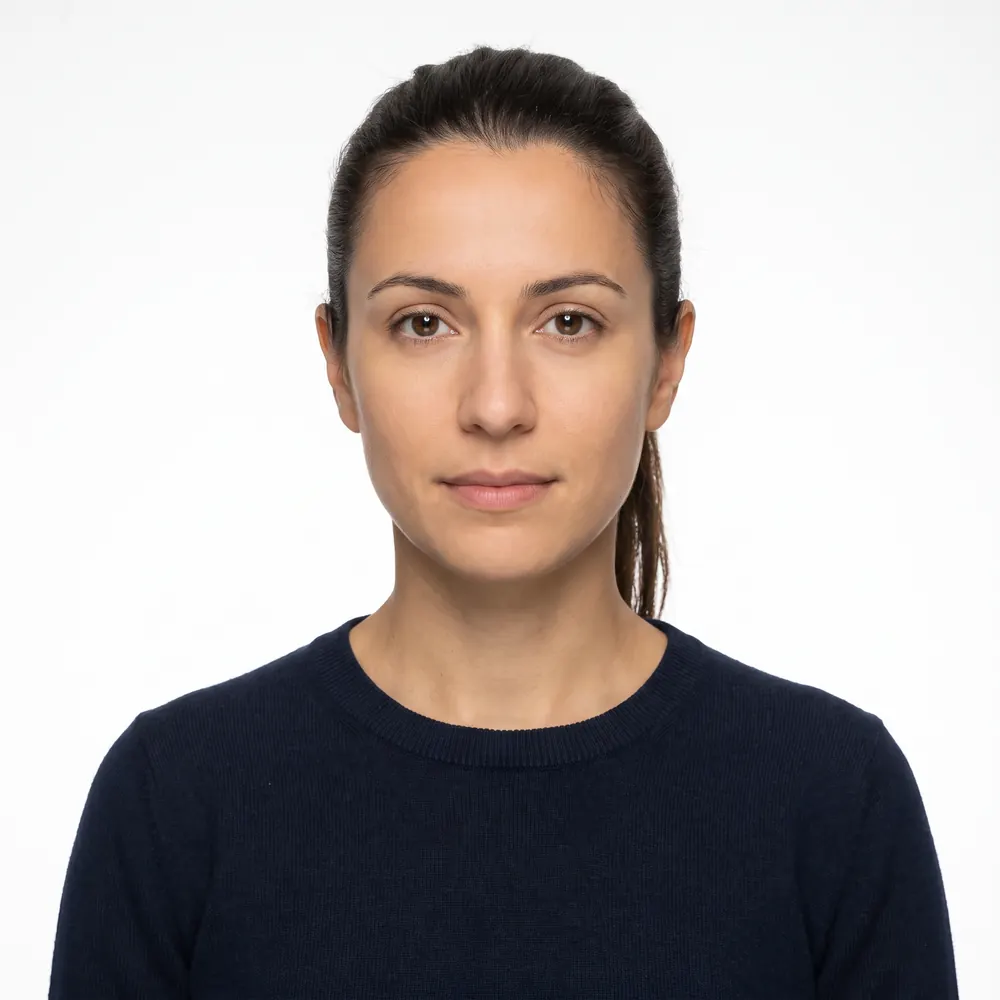
- Baby photographed alone, no parent visible
- Eyes open and looking towards the camera
- Plain white or off-white sheet behind the head
- Head straight, filling about 60% of the image height
- Taken within six months of the day you submit
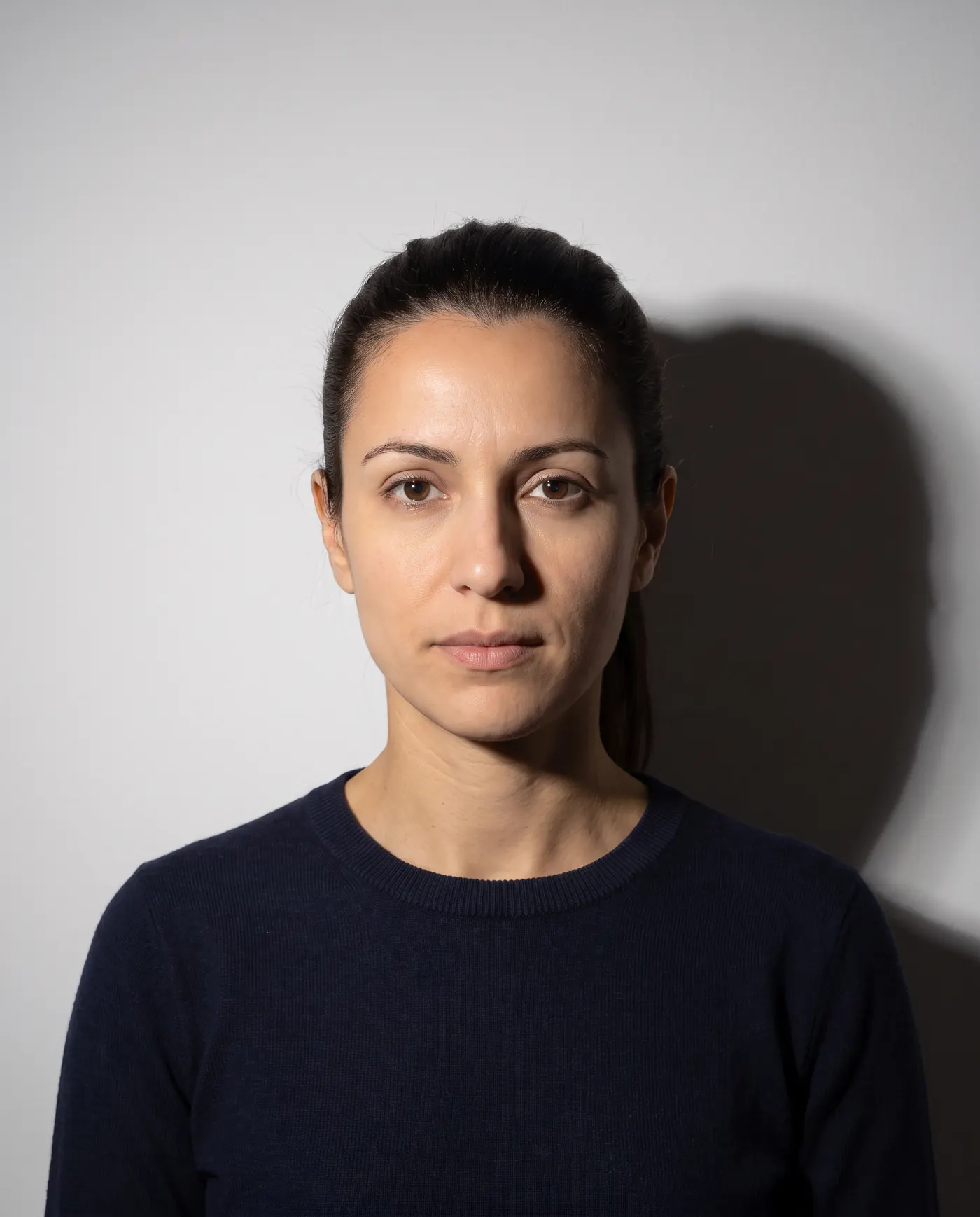
- A parent's hand supporting the head or chin
- A sleeping baby with eyes closed
- A pacifier, blanket or toy covering part of the face
- A face cropped from a family or group picture
- A hand, shadow or crease edited out afterwards
Step by step
- 1
Pick the moment, not the time slot
Right after a feed or a nap, when the baby is fed, awake and calm. Have a second adult to make noise or hold a toy just above the camera lens.
- 2
Lay out the sheet by a window
A plain white or off-white sheet, pulled smooth, in soft daylight. Or cover a car seat with the sheet so no straps or padding show around the head.
- 3
Shoot from directly in front of the face
Phone parallel to the baby's face, not at an angle, with your body away from the light so you don't cast a shadow. Take a burst and pick the frame with eyes open and head straight.
- 4
Crop the original to a square
Use the original camera file. Place the head so it fills about 60% of the height, then export a 600 x 600 JPEG of 240 kB or less.
- 5
Check the date and keep it separate
The photo must be within six months when you submit, and a baby changes fast. Name the file after the child, and never reuse it for a future year's entry.
The six-month clock and a growing baby
The instructions say the photo must be taken within the last six months to reflect current appearance. For an adult, a photo from five months ago still looks like them. For a baby, five months is a large share of their life.
Two practical consequences:
- Take the baby's photo last. The DV-2027 dates are not announced. When they are, photograph the baby close to the day you submit, even if the adults' photos are already done.
- Never reuse it. "Submitting the same photograph that was submitted with a prior year's entry will make you ineligible for a DV." That applies to children's photos too, and by next year the baby will look different anyway.
If the entry form refuses the file, our guide to DV lottery photo errors goes through the causes one by one.
After selection: the baby's photos again
If your entry is selected, the photos on the entry are not the end of it. The State Department's visa photo page says each DV applicant will need to bring two identical photos, printed on photo quality paper, 2 x 2 inches (51 x 51 mm), to the interview. The same six-month rule applies, so a baby who was a newborn at entry will need new prints taken close to the interview.
For children applying for other US visas, see our DS-160 photo for a child guide, and for the months when a baby becomes a wriggling toddler, toddler passport photo tricks apply to visa photos too.
Where our tool fits, honestly
We are an independent photo tool with no link to the Department of State. We cannot tell you whether a child must be listed beyond quoting the instructions, and nothing we do affects a random draw.
What we do is turn a phone photo of your baby into a compliant file: square crop, head measured against the 50-69% window, a 600 x 600 JPEG under 240 kB, and a check of tilt, background evenness, sharpness and exposure, before you pay. It doesn't detect hands or objects, so look for those yourself. We won't remove a hand or clean up a sheet, because a manipulated DV photo can make you ineligible. When the baby is awake and the sheet is by the window, upload the best frame.
For the full adult specification, see DV lottery photo requirements, and for how DV photos compare with every other US form, our US visa and immigration photo guide.
Frequently asked questions
Does a newborn need a photo on a DV lottery entry?
Yes, if the baby is already born when you submit. The instructions require every living, unmarried child under 21 on the date of entry to be listed, each with an individual photograph meeting the same specifications as yours. There is no age exemption for babies, only for children who are already U.S. citizens or permanent residents.
Can my baby's eyes be closed in a DV photo?
No. The DV instructions say the child should be looking at the camera with eyes open, and the State Department's visa photo FAQ answers the question directly: have your child's eyes open and looking straight ahead towards the camera. Wait for an alert, calm moment rather than a sleeping one.
Can I hold my baby for the DV lottery photo?
Not in the frame. The instructions say no other person should be in the photo, and the visa photo FAQ adds that nothing used to support the child should be visible, including a parent's arms or hands. Lay the baby on a white sheet, or use a car seat covered with one, so nobody needs to hold them.
What if my baby is born after I submit the DV entry?
Then the baby is not on the entry and no photo is needed at that stage. The instructions say the listing requirement only applies to people who were family members when the entry was submitted, not those acquired later. A baby born before you submit must be listed, with a photo.
Can I crop my baby's photo out of a family picture?
No. The instructions ask for individual photographs of each child, and no other person should appear in a baby's photo. A face cropped out of a group shot is usually too small for the 50% to 69% head-height rule anyway. Photograph the baby alone.
Can I edit out a hand or shadow in my baby's DV photo?
No. The instructions say a photograph that has been manipulated in any way may make you ineligible. Removing a hand, smoothing a shadow or brightening the sheet all change the photo. Cropping and resizing are fine; anything else means taking the shot again.
Sources
- U.S. Embassy in Cameroon - Instructions for the 2026 Diversity Immigrant Visa Program (DV-2026), family members, baby and toddler photos, FAQ
- U.S. Department of State - Photo Frequently Asked Questions (children, eyes, supports)
- U.S. Department of State - Visa Photo Requirements (DV selectees, baby and toddler tips)
- U.S. Department of State - Photo Composition Template
- Federal Register / GovInfo - Visas: Enhancing Vetting and Combatting Fraud in the Diversity Immigrant Visa Program, final rule (March 11, 2026)
- U.S. Embassy in Hungary - Changes to Entry Period for the 2027 Diversity Visa Program
Keep reading
 Requirements
DV Lottery Family Photos: Who Must Be on the Entry
DV lottery family photos: a separate photo for you, your spouse and every unmarried child under 21, who is exempt, and the omissions that void an entry.
Read the guide Requirements
DV Lottery Photo Rules: Don't Get Disqualified
DV lottery photo rules: a 600x600 JPEG under 240 kB, a separate photo per family member, and the reuse rule that makes an entry ineligible.
Read the guide Requirements
US Visa and Immigration Photos by Form: 2026 Guide
Which US visa and immigration forms need your photo in 2026: DS-160 uploads, DS-260 prints, DV entries, USCIS forms and biometrics, in one sourced table.
Read the guide Requirements
Green Card Photo 2026: I-485 Prints vs Biometrics
Green card photos after USCIS's December 2025 change: the card photo is taken at biometrics, yet I-485 instructions still list two prints. What each says.
Read the guide Troubleshooting
DV Lottery Photo Rejected? 8 Causes and Fixes
Why a DV lottery photo gets rejected: the file checks, head size, glasses, edits and reused photos, and which mistakes can be fixed before you submit.
Read the guide Troubleshooting
DS-160 Photo Upload Error? Fix It in 2 Minutes
Every DS-160 photo upload error explained: what the CEAC check rejects, the exact file specs, and how to make a photo that passes. Pay only at download.
Read the guide