Requirements
DS-160 Photo for a Child: Rules for Kids and Infants
DS-160 photo rules for children and babies: same 600x600 to 1200x1200 JPEG, eyes open even for newborns, no hands in frame, one photo per child. Sourced.
By Antoine Duno
Updated September 28, 202612 min read
Specs verified on September 16, 2026 against the issuing authority
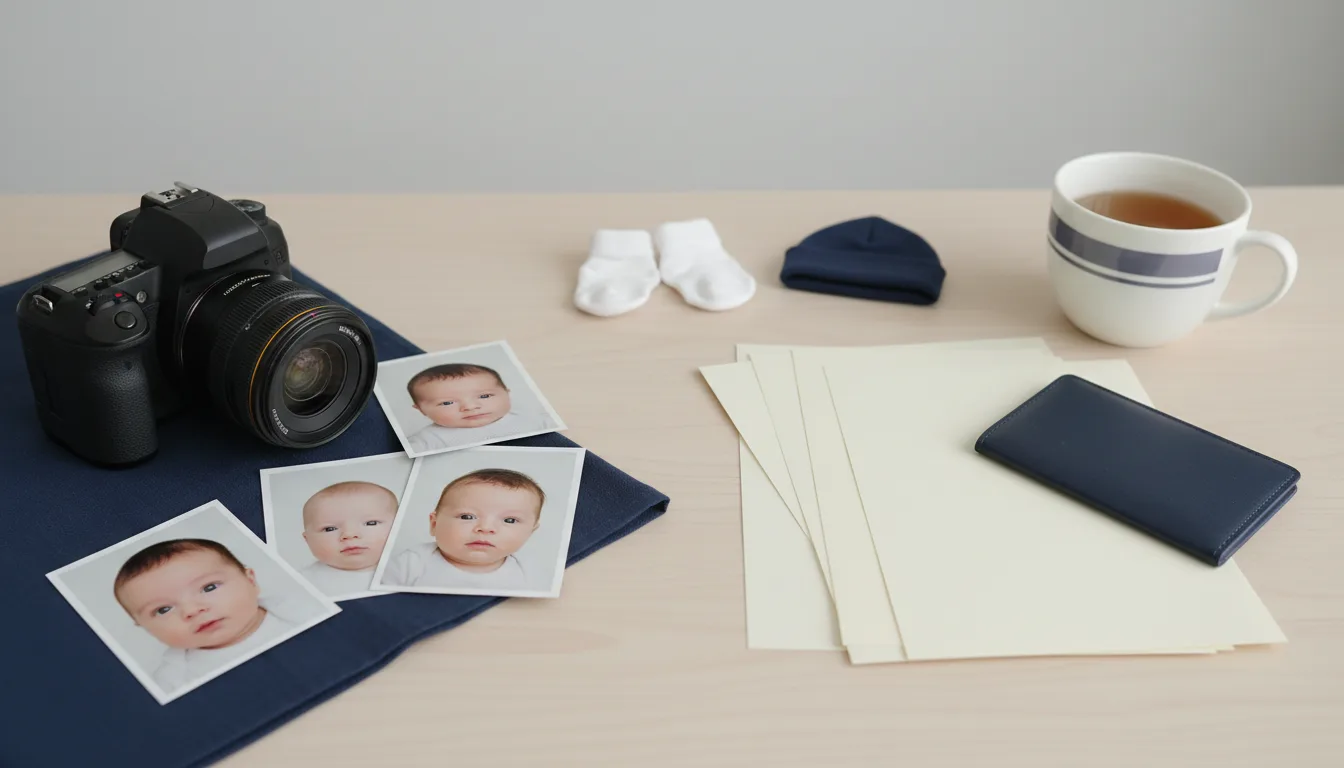
A family visa application means one DS-160 for every traveller, and one photo on each. The children's photos are the hard ones, and the easy mistakes come from habits that are fine elsewhere: a passport rule that lets a baby's eyes be half-closed, a hand steadying a wobbly head, one family picture cropped four ways.
US visa photos have no child format. A newborn's DS-160 image follows the adult specification, with three extra rules the State Department spells out for children.
These rules come from the State Department's visa Photo Requirements, Photo Frequently Asked Questions, Digital Image Requirements and DS-160 FAQ pages, read on the Department's adoption.state.gov mirror because travel.state.gov blocks automated readers. The acceptance of any photo is at the discretion of the embassy or consulate where the child applies.
- Dimensions
- Square, 600 x 600 to 1200 x 1200 px
- Format and size
- JPEG, 240 kB or less, 24-bit sRGB color
- Head height
- 50% to 69% of image height
- Eye height
- 56% to 69% from the bottom
- Maximum age
- Taken in the last 6 months
- Other people
- None; the child alone
- Hands or supports
- None visible, including a parent's
- Eyes
- Open, looking at the camera, any age
- Glasses
- Not allowed (rare medical exception)
- Background
- Plain white or off-white
One DS-160, and one photo, per child
There is no family DS-160. The State Department's DS-160 FAQ describes a family or group option on the "Thank You" page after you submit your own application: it imports some information, such as the destination, into a new application. But it also says that if you use it, "you must create an individual application for each family member."
Each application needs its own photo upload. Two consequences for families:
- No group photo. The FAQ says the child must be the only person in the photo. A face cropped out of a family picture breaks that rule if any trace of anyone else remains, and it usually leaves a head too small or too blurry for the 50% to 69% band.
- No old photo. Each image has to be taken within six months of submitting and reflect the child's current appearance.
Who fills it in: the DS-160 FAQ says that if the applicant is under 16, "the applicant's parents or guardian may complete and click the 'Sign Application' button on his or her behalf."
The three child rules, word for word
The general visa photo rules apply to children in full: color, plain white or off-white background, full-face view directly facing the camera, a neutral expression with both eyes open, no hat that hides the hair or hairline unless worn daily for a religious purpose, no headphones, no glasses. On top of that, the photo FAQ and the photo requirements page add three things for children.
1. The child is alone. "Can a parent or guardian appear in the photo of a child?" The FAQ's answer: "No, the child must be the only person in the photo."
2. Nothing holding the child. Same answer, next sentence: "Nothing used to support the child should be in the camera's frame, including the arms or hands of a parent holding the child." A hand behind the head, fingers on a shoulder, a sleeve at the edge of the frame: all of it counts.
3. Eyes open, at every age. "Is it acceptable for my child's eyes to be closed in his/her photo?" "No. Please have your child's eyes open and looking straight ahead towards the camera." The photo requirements page repeats it in its section on babies and toddlers: "your child should be looking at the camera with his or her eyes open."
Babies: the two setups the State Department suggests
The FAQ answers "What's the best way to take a photo of a baby?" with two setups, and both solve the no-hands rule and the background at once.
On a sheet. "Lay your baby on his or her back on a plain white or off-white sheet. This will ensure your baby's head is supported and provide a plain background for the photo." The warning that follows is the one parents miss: "Make certain there are no shadows on your baby's face, especially if you take a picture from above with the baby lying down." When you lean over, your own head and the phone block the light. Keep the window beside the baby, not behind you.
In a car seat. "You can also cover a car seat with a plain white or off-white sheet and take a picture of your child in the car seat. This will also ensure your baby's head is supported." A car seat keeps the face more upright, which makes a straight-on shot at eye level easier. Tuck the sheet so no straps or padding show near the head.
The eyes-open rule is what makes babies hard. Plan the photo for a calm, awake moment, with a second adult just behind the camera to catch the baby's attention. Our baby passport photo guide covers the white-sheet setup step by step; just remember the visa version needs open eyes.
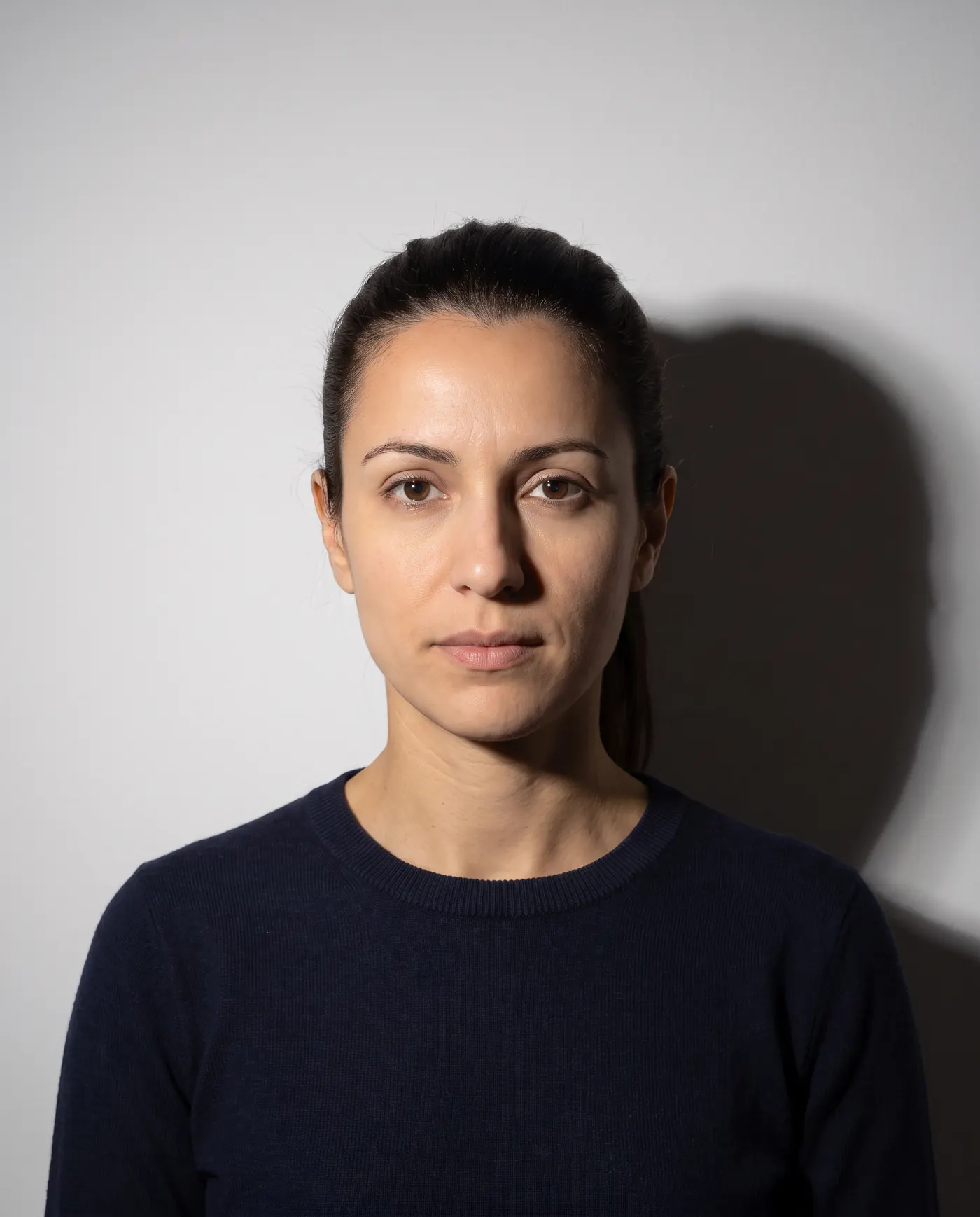 Rejected
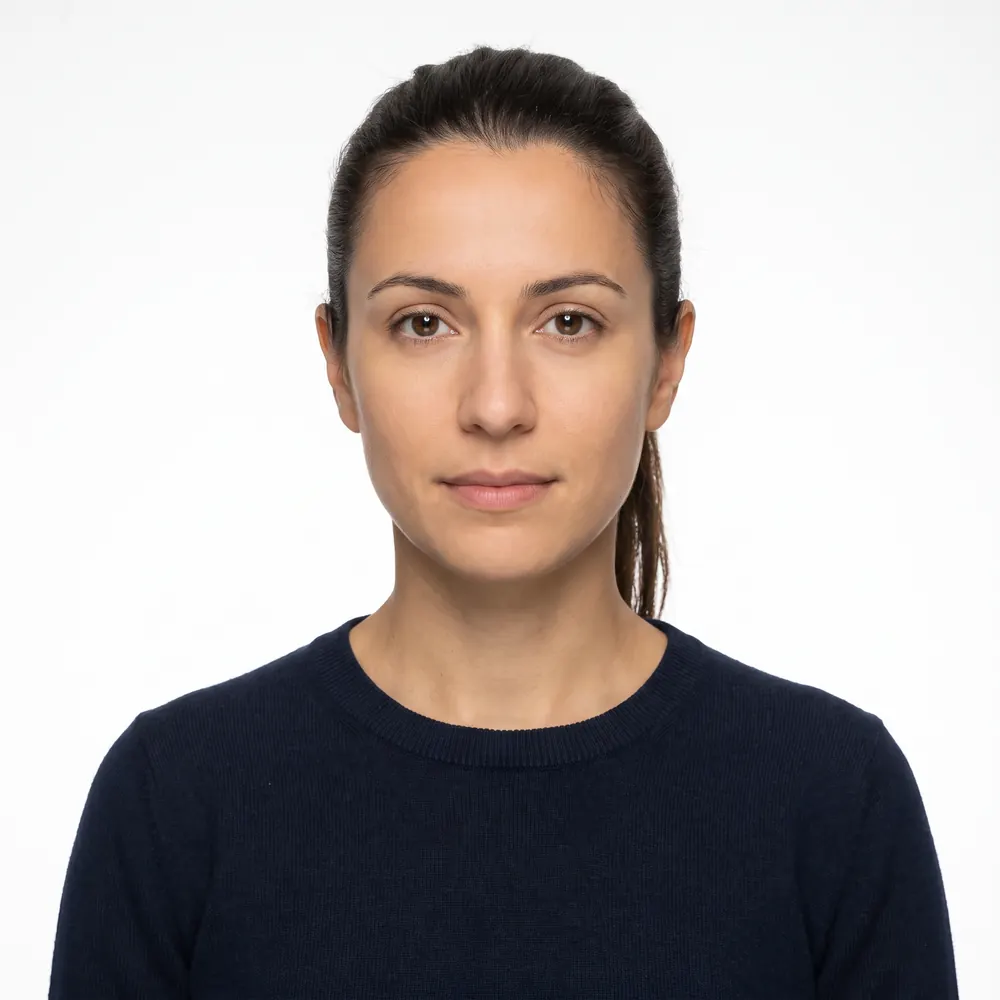 Accepted
Toddlers and young children
Toddlers can't lie still and won't hold a pose. What helps:
- Seat them. A car seat or a high chair draped in a white sheet keeps them in one place without a hand in frame.
- Put the attention behind the lens. A second adult with a toy or a phone just above the camera gets the eyes looking straight ahead, which is what the FAQ asks for.
- Watch the expression. The rules ask for a neutral expression with both eyes open, and the FAQ says photos with unusual expressions or squinting will not be accepted. A big grin at the toy is a retake.
- Take many frames. A burst in good daylight gives you one with open eyes, a straight head and a closed mouth.
Our guide to the toddler passport photo has more tricks for this age; the size and eye rules are the visa ones on this page.
Older children and teenagers
From school age, the problems are the adult ones:
- Glasses. Eyeglasses have not been allowed in new visa photos since November 1, 2016, except in rare medical cases with a signed statement from a medical professional. There's no exception for children who wear them every day.
- Hats and hoods. A head covering that obscures the hair or hairline is out, unless worn daily for a religious purpose.
- Headphones and earbuds. Not acceptable. If the child normally wears a hearing device, the photo requirements page says it may be worn.
- Uniforms. The rules say uniforms should not be worn in the photo, except religious clothing worn daily. Ordinary clothes are the safe choice, not a school uniform.
The file: the same specification as a parent's
The Digital Image Requirements page has one specification, and it doesn't mention age:
| Requirement | DS-160 digital image |
|---|---|
| Shape | Square, height equal to width |
| Dimensions | 600 x 600 minimum, 1200 x 1200 maximum |
| Format | JPEG |
| File size | 240 kB or less |
| Color | 24 bits per pixel, sRGB |
| Compression | 20:1 or less |
| Head height | 50% to 69% of image height, top of hair to bottom of chin |
| Eye height | 56% to 69% of image height, from the bottom |
The head-height rule is proportional, so a small head has to be photographed closer or cropped tighter to fill half the frame. Cropping a small head out of a wide shot to fill 50% of a 600-pixel square leaves very few original pixels to work with, and the photo requirements page lists low-quality photos among those not accepted. Get close when you shoot, rather than rescuing it in the crop.
The upload itself fails for children for the same reasons it fails for adults: a rectangular phone photo, a HEIC file, several megabytes instead of 240 kB. Our DS-160 photo upload error guide goes through each message.
What the State Department says about phone photos
This is inconvenient for anyone taking a child's photo at home, us included, so here it is plainly. The visa photo requirements page says "We recommend you use a professional visa photo service to ensure your photo meets all the requirements," and lists "low quality vending machine or mobile phone photos" among those that are not acceptable. The FAQ says you can use a digital camera, and adds that "most webcams and mobile phones cannot provide images of sufficient quality."
The same page also says, "you may take the photo yourself," provided it is not digitally enhanced or altered, and points you to the composition template, the digital image requirements and the Department's own cropping tool. So a home photo is allowed; a low-quality one is not. Good daylight, the rear camera rather than the front one, a steady phone and a sharp, uncompressed original give you the best chance. The consulate decides.
Taking and preparing the photo
- 1
Set up the background first
A plain white or off-white sheet: on a bed for a baby, over a car seat or high chair for a toddler, pinned flat on a wall for an older child. Place it by a window for even daylight.
- 2
Get a second adult
One person holds the phone at the child's eye level; the other catches the child's attention from just behind the camera, staying fully out of frame.
- 3
Shoot close and shoot many
Fill most of the frame with head and shoulders, leaving a margin to crop. Take a burst and pick the frame with eyes open, head straight, neutral expression, no hands visible.
- 4
Crop the original to a square
Head top to chin at 50% to 69% of the height, eyes 56% to 69% up from the bottom. Export as JPEG at 600 x 600 or larger, up to 1200 x 1200, at 240 kB or less.
- 5
Label each child's file
Name each file after the child before you open the DS-160s, so the right photo goes on the right application.
- 6
Check the confirmation page
If the photo shows on the child's DS-160 confirmation page, the upload worked. If there is an X, bring one printed photo that meets the requirements with the confirmation page.
Before you upload each child's photo
- The child alone, facing the camera, eyes open
- Plain white or off-white background, no shadow on the face
- Neutral expression, full face visible
- Square JPEG, 600 to 1200 px, 240 kB or less
- Taken within the last 6 months, a separate file per child
- A parent's hand, arm or lap anywhere in the frame
- A sleeping baby, or eyes half-closed
- Glasses, headphones or a hood
- A face cropped out of a family photo
- A hand, shadow or background edited out afterwards
The interview: prints, waivers and growing kids
Printed photos. The photo requirements page says some embassies and consulates require applicants to bring one photo that meets the requirements to the interview. The U.S. Embassy in London, on its interview documents page for family members, recommends bringing a photo to the visa interview so it is available if the consular officer asks, and says it can be the same photo you uploaded if it meets the requirements. Print it at 2 x 2 inches on photo quality paper, matte or glossy.
Interview waivers. Some posts can waive the interview for young children. The U.S. Embassy in the Dominican Republic, for example, says children under 14 may be eligible. Rules vary by post: the U.S. Embassy in London's page for E visa family members says children under 14 are required to attend in person. A waiver changes whether the child attends, not whether their DS-160 needs a photo.
A child who changed. A baby photographed in spring looks different by autumn. The photo requirements page says that if a child under 16 has changed through normal aging, the child "will generally not have to provide a new photo," while noting acceptance is at the discretion of the embassy or consulate. The six-month rule still applies.
If the family is also applying for immigrant visas, the photos work differently: DS-260 applicants bring two identical 2 x 2 inch prints to the interview. Our US visa and immigration photo guide sorts every form by photo type, and the full adult file specification is in DS-160 photo requirements.
Where our tool fits, honestly
We're an independent photo service, not the State Department or a consulate. We can't make a toddler look at the lens, and we won't paint out a hand, whiten a sheet or open a baby's eyes, because visa photos must not be digitally altered.
What we do is the file work for each child. Upload a photo taken against a real white sheet, and we crop it square, check the head sits inside the 50% to 69% band, export a JPEG under 240 kB, and check tilt, background evenness, sharpness and exposure before you pay. It doesn't detect glasses, hands or toys, so check those yourself. Checking is free. You pay only at download: $4.99 per digital file, or $6.99 with a 4 x 6 print sheet if the consulate wants a printed photo too.
Frequently asked questions
Does a baby need a photo on the DS-160?
Yes. Every nonimmigrant visa applicant fills in their own DS-160, and the form instructs each applicant to upload a digital image. The State Department publishes no age exemption. A parent or guardian can complete and sign the form for a child under 16, but the photo must show the child alone.
Can my baby's eyes be closed in a US visa photo?
No. The State Department's photo FAQ asks directly whether a child's eyes can be closed, and answers: have your child's eyes open and looking straight ahead towards the camera. This differs from US passports, where a baby's eyes may be not entirely open.
Can I hold my child in the DS-160 photo?
Not in the frame. The photo FAQ says the child must be the only person in the photo, and nothing used to support the child should be in the camera's frame, including a parent's arms or hands. Lay a baby on a plain white sheet or use a car seat covered with one.
What size is a child's DS-160 photo?
The same as an adult's. A square JPEG between 600 x 600 and 1200 x 1200 pixels, 240 kB or less, in color, with the head filling 50% to 69% of the image height and the eyes 56% to 69% up from the bottom. There is no smaller child format.
Can I use the same photo for several family members' DS-160s?
No. Each family member has an individual application, and each photo must show only that person. The DS-160 family application option copies some information into a new form, but you still create a separate application, and a separate photo, for every child.
Does my child need a new photo because they grew?
Not usually, within the six-month limit. The State Department says a child under 16 whose appearance changed through normal aging will generally not have to provide a new photo, though acceptance is at the embassy or consulate's discretion. The photo must still be taken within the last six months.
Sources
- U.S. Department of State - Visa Photo Requirements (babies and toddlers, change of appearance; read on the adoption.state.gov mirror)
- U.S. Department of State - Photo Frequently Asked Questions (children, eyes, babies, mobile phones)
- U.S. Department of State - Digital Image Requirements
- U.S. Department of State - Photo Composition Template
- U.S. Department of State - DS-160 Frequently Asked Questions (family applications, applicants under 16, photo upload)
- U.S. Department of State - Passport Photos (babies' eyes, for comparison)
- U.S. Embassy and Consulates in the United Kingdom - NIV Interview Documents for Family Members
- U.S. Embassy in the Dominican Republic - Interview waiver process for children under 14 years old (last updated June 18, 2024)
Keep reading
 Requirements
DS-160 Photo Requirements 2026: Exact Specs
Every DS-160 photo spec with its source: 600x600 to 1200x1200 pixels, 240 kB JPEG, head at 50-69% of image height, no glasses. Checked 16 September 2026.
Read the guide Troubleshooting
DS-160 Photo Upload Error? Fix It in 2 Minutes
Every DS-160 photo upload error explained: what the CEAC check rejects, the exact file specs, and how to make a photo that passes. Pay only at download.
Read the guide How-to
Baby Passport Photo at Home: US Rules for Newborns
US passport photo rules for babies, quoted from the State Department: eyes can be partly closed, no hands in frame, white-sheet and car-seat setups.
Read the guide Requirements
Green Card Photo 2026: I-485 Prints vs Biometrics
Green card photos after USCIS's December 2025 change: the card photo is taken at biometrics, yet I-485 instructions still list two prints. What each says.
Read the guide How-to
DV Lottery Photo for a Baby: Newborns on the Entry
A baby on a DV lottery entry needs their own photo: same 600x600 JPEG, eyes open, no hands in frame. The rules, the lying-down setup and the edge cases.
Read the guide Troubleshooting
DV Lottery Photo Rejected? 8 Causes and Fixes
Why a DV lottery photo gets rejected: the file checks, head size, glasses, edits and reused photos, and which mistakes can be fixed before you submit.
Read the guide