Requirements
China Visa Photo Requirements: 33x48 mm Rules 2026
China visa photos are 33 x 48 mm on glossy paper with a 28-33 mm head; online uploads are a 354-420 px JPEG of 40-120 KB. Specs verified September 2026.
Making the photo now? China visa photo: exact size and free check

By Antoine Duno
Published 7 min read
Specs verified on September 18, 2026 against the issuing authority
The paper photo for a Chinese visa is 33 mm wide by 48 mm high, printed on glossy photo paper, with your head between 28 and 33 mm from chin to crown. The online application form takes a different file: a JPEG between 354 x 472 and 420 x 560 pixels, 40 KB to 120 KB. The two are not the same shape, so mixing them up is an easy mistake.
Every figure here comes from the Chinese Visa Application Service Center pages on visaforchina.cn and the Ministry of Foreign Affairs "Photo Requirements for Chinese Visa Application" sheet that the centres publish, read on September 18, 2026. The Ministry's sheet is an image, so we read it from the copy on the Kuala Lumpur centre's site. Three of the Chinese embassy and consulate pages we tried carry the specification only as an attached image we could not read as text, so we do not cite them for figures.
- Paper photo size
- 33 mm wide x 48 mm high
- Head width (paper)
- 15 mm to 22 mm
- Head height, chin to crown (paper)
- 28 mm to 33 mm
- Space above the crown (paper)
- 3 mm to 5 mm
- Space below the chin (paper)
- 7 mm or more
- Paper
- Glossy photo paper, not matte or plain
- Digital dimensions
- 354 x 472 px minimum to 420 x 560 px maximum
- Digital format
- JPEG, RGB 24-bit color
- Digital file size
- 40 KB to 120 KB
- Background
- White or close to white, no border around the image
- Age of photo
- Within 6 months
- Head tilt
- 20 degrees or less left or right; 25 degrees or less up or down
- Glasses
- Allowed if untinted, no glare, shadow or frame over the eyes
- Head coverings
- Only for religious reasons, and no facial feature obscured
Print and file are two different photos
The Ministry's sheet gives both specifications in one place, but they describe two objects. The paper photo is the one attached to the visa application form. The digital photo is the file you upload when you fill in the form online. The service centre's upload FAQ asks for a JPEG within the 40-120 KB range, taken within the past 6 months against a white or close to white background.
The shapes differ, and the arithmetic shows how much. The print is 33 by 48 mm, so its width divided by its height is 0.6875 (11:16). The smallest and largest digital sizes, 354 x 472 and 420 x 560 pixels, both work out to exactly 0.75 (3:4). A file cropped to the print's shape sits outside the digital range, and a file cropped to the digital shape does not fit the print. Treat them as two crops of the same original photo, not one image scaled twice.
Head size, in numbers you can check
On the paper photo, head height of 28 to 33 mm on a 48 mm photo is 58 to 69 percent of the height (28 / 48 and 33 / 48, arithmetic). The head must be horizontally centered, the space between the crown and the top edge is 3 to 5 mm, and the space between the chin and the bottom edge is at least 7 mm. Because the frame is 48 mm tall against 33 mm wide, a square US 2 x 2 in crop is not a substitute.
The Ministry also gives an example for the digital file at 354 x 472 pixels: the face width should be 205 pixels, give or take 14, the gap between the top edge of the image and the crown should be 10 to 70 pixels, and the distance from the bottom edge of the image up to the line through the eyes should be more than 256 pixels. The distance between the eyes should be more than 60 pixels. The sheet adds that when hair is very high, voluminous hair can be trimmed off to keep the face size correct. It gives those figures as an example at that size, so scale them if your file is larger.
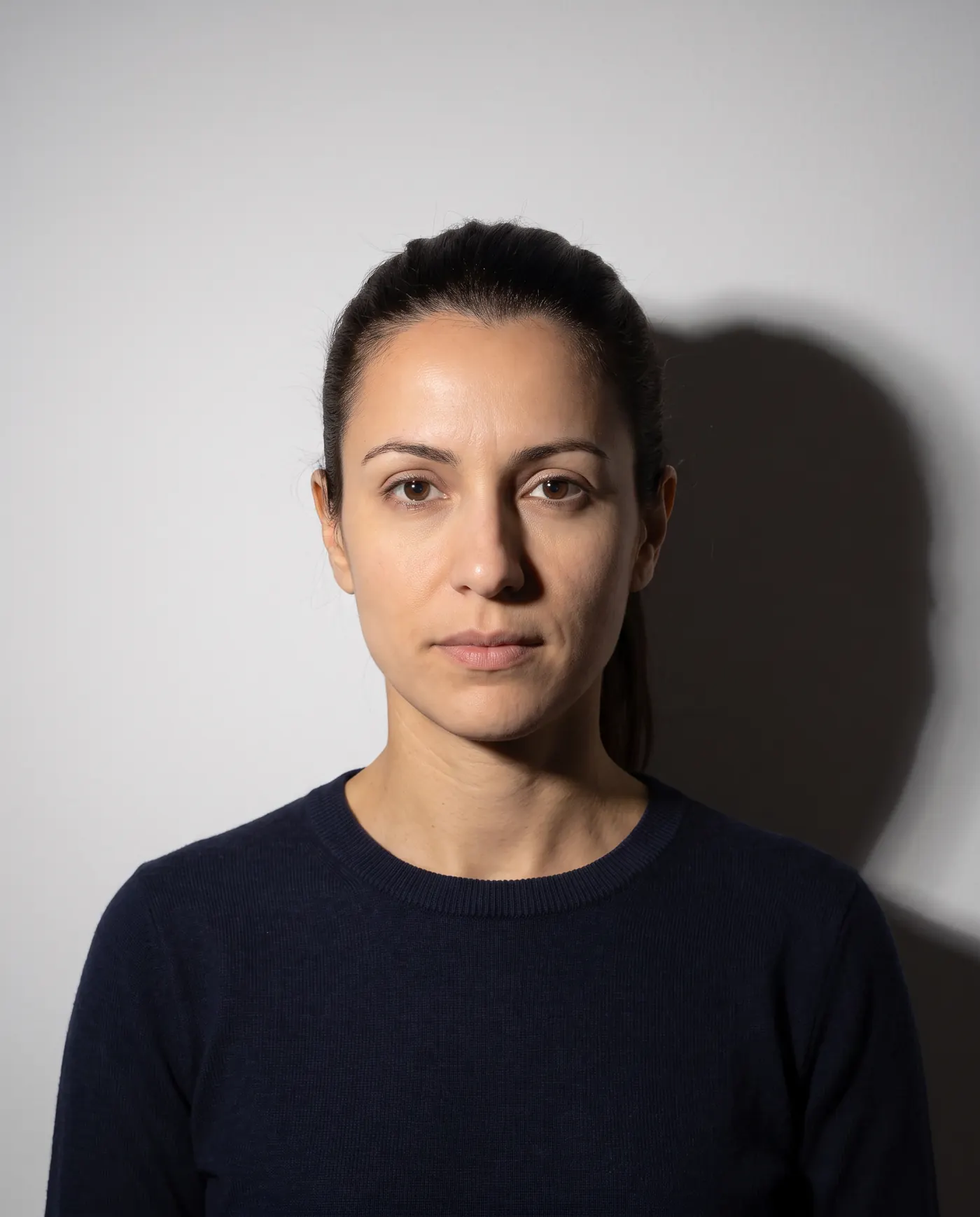 Rejected
 Accepted
The background and the face
The background must be white or close to white, and the photo must have no borders or edge frame. The sheet is not asking for the strict pure white some other countries require, but it does list an uneven background as a failure: light or shadow over the face, or shadow in the background, sits beside blur and over- or under-exposure in its photo examples.
The face must be square to the camera and fully visible. The specification asks for a neutral expression, eyes open, mouth closed and ears visible, with no visible distortion of the features and no hand, toy or other person in the shot. Head tilt is limited to 20 degrees left or right and 25 degrees up or down. The Ministry's sheet includes hair covering the eyebrows, eyes or ears among its failing examples, so tuck it back.
Glasses and head coverings
This is where a China visa photo differs most from a US one. The Ministry allows eyeglasses when the lenses are not tinted and no glare, shadow or frame obscures the eyes. The service-centre page for the photo requirements adds that thick-rimmed, tinted or glare glasses are not allowed. If your lenses reflect the light, take the glasses off rather than test it. Our glasses in passport photos guide compares this with the rules of other countries, where the answer is often no.
Hats and other head coverings are allowed only for religious reasons, and only if no facial feature is covered. The wording the sheet uses is that facial features must not be obscured.
If two official pages disagree
Chinese visa service centres publish the same specification on several pages, and not all of them match. Three inconsistencies are worth knowing about.
- Digital size. The Ministry sheet gives a range from 354 x 472 to 420 x 560 pixels. Two service-centre upload FAQ pages instead say the dimensions "cannot exceed 354*472". A file of exactly 354 x 472 pixels satisfies both readings, so if you want no argument, export that size and keep it within 40-120 KB.
- Head height. One service-centre page prints the head height as "20mm to 33mm", while the Ministry sheet and another centre page say 28 to 33 mm. We use 28 to 33 mm, the figure that appears on the Ministry's own sheet.
- Some pages say less. A few centre pages only list "48mm x 33mm", 6 months, a white background and a bare head. They are shorter, not different; the Ministry sheet has the detail.
Whichever page your own service centre points you to is the one to follow. If your centre gives a photographer's checklist, use it.
How to get a photo that passes
- 1
Find out which route your visa center uses
Read the photo requirements page of the visa service centre or embassy that will take your application. The paper photo goes on the form; the digital photo is for the online form.
- 2
Take one original, in the last 6 months
Face the camera square, eyes open, mouth closed, ears showing, on a plain white or near-white wall. Keep glasses clear of glare or take them off.
- 3
Make the print at 33 x 48 mm on glossy paper
Center the head with 3 to 5 mm above the crown and a head height of 28 to 33 mm. Ask the printer for glossy, not matte.
- 4
Make the digital file as a separate crop
Crop from the original to the 3:4 shape, 354 x 472 pixels or up to 420 x 560, save as JPEG and keep it between 40 and 120 KB.
- 5
Compare both against the sheet before you submit
Check the head width, the head height, the gap above the crown and the background. The sheet says applications may be declined when photos miss the stated requirements, so measure rather than judge by eye.
If you cannot get the crop right yourself, a photographer or photo kiosk that carries a China visa template is the honest route. For the Indian side of this region, see the India passport photo requirements, which has a different shape again, and for the Japanese equivalent, the Japan visa photo guide. For another Asian upload with its own limits, see the Vietnam e-visa photo guide, and for a Korean travel authorisation, the K-ETA photo rules. The background color guide covers how white is white for each country, and visa photo sizes by country puts them next to each other.
What can get the photo refused
- Taken within the last 6 months and printed on glossy photo paper
- Head 28 to 33 mm tall and 15 to 22 mm wide on the 33 x 48 mm print
- White or near-white background, evenly lit, no border
- Clear lenses with no glare, or no glasses
- Matte or plain paper for the print
- Tinted, thick-framed or glaring glasses
- Head tilted beyond 20 degrees sideways or 25 degrees up or down
- Hair covering the eyebrows, eyes or ears
- A digital file outside 40-120 KB or the wrong shape
The sheet also says applications may be declined if photos do not meet the stated requirements. Checking your photo is free at our photo checker, which crops and measures against the numbers above — but it cannot measure head width or tilt angle the way the sheet states them, so compare against the centre's own checklist too.
Frequently asked questions
What size is a China visa photo?
For the paper photo attached to the application form, 33 mm wide by 48 mm high, with the head 15 to 22 mm wide and 28 to 33 mm tall from chin to crown. For the online form, a JPEG between 354 x 472 and 420 x 560 pixels and between 40 KB and 120 KB.
Can I wear glasses in a China visa photo?
Yes, unlike a US visa photo. The Ministry of Foreign Affairs specification allows eyeglasses only if the lenses are not tinted, there is no glare, shadow or frame obscuring the eyes, and the frames are not thick. Sunglasses and tinted lenses are refused. If your lenses glare, take them off.
Does a China visa photo need a white background?
White or close to white, with no borders or edge frame around the image. The specification does not ask for pure white, but its failing examples include shadow across the face, shadow in the background and under- or over-exposure, so light the wall evenly.
How recent must a China visa photo be?
Taken within the last 6 months. The service-centre pages and the Ministry's specification all use that window, and the photo must reflect your current appearance. A photo left over from an earlier application is only usable if it is still inside the window and meets the size rules.
Can I upload a scan of the printed photo to the online form?
Not directly. The paper photo is 33 x 48 mm, a shape of about 11:16, while the online file must be between 354 x 472 and 420 x 560 pixels, a 3:4 shape. Cropping a scan to the wrong shape fails the size check, so make the digital file from the original camera image.
Do I need a printed photo, a digital file, or both?
It depends on how your service centre takes the application. The Ministry sheet gives both: the paper photo attached to the application form and the digital photo for the online form. Check the page of the centre or embassy that will receive your application to see which applies.
Sources
- Ministry of Foreign Affairs, Department of Consular Affairs - Photo Requirements for Chinese Visa Application (poster, hosted by the Chinese Visa Application Service Center, Kuala Lumpur)
- Chinese Visa Application Service Center (Sydney) - Photo requirements FAQ
- Chinese Visa Application Service Center - Important Notice: Visa Application photo must satisfy specific requirements
- Chinese Visa Application Service Center - How to upload the photo when filling in the online application form
- Chinese Visa Application Service Center - Photo upload guide (online form)
The China visa specification, with the official source of each value: China visa photo: exact size and free check
Keep reading
 Requirements
India Passport Photo Size and Rules for 2026
India passport photo requirements from Passport Seva's own instruction booklet: 4.5 x 3.5 cm, plain white background, and when you need no photo at all.
Read the guide Requirements
Japan Visa Photo 2026: 45x35 mm Form, eVISA Upload
Japan's visa form says 45 x 35 mm, some embassies say 45 x 45 or 35 x 45. Which to use, and the JAPAN eVISA upload rules. Checked September 2026.
Read the guide Requirements
India e-Visa Photo Upload: Size, Format and Fixes
The photo India's e-Visa portal accepts: square JPEG, 10 KB to 1 MB, no glasses, plain white or light background, plus fixes for the upload errors.
Read the guide Requirements
UAE Visa Photo Requirements: ICP and GDRFA Rules 2026
UAE visa and residency photo rules from ICP and GDRFA Dubai: 3.5 x 4.5 cm, white background, width 35 to 40 mm, plus what neither publishes about uploads.
Read the guide Requirements
Vietnam e-Visa Photo: 4x6 cm, JPG Under 2 MB, No Glasses
What Vietnam's official e-visa portal asks of the photo: 4x6 cm, JPG or JPEG under 2 MB, no glasses or hat, white background, and what it never states.
Read the guide Requirements
OCI Photo Requirements 2026: Square Photo and Signature
OCI photo and signature specs from the MHA portal and VFS USA: square photo, pixel and KB limits, background, face size, and where the sources disagree.
Read the guide