Requirements
Japan Visa Photo 2026: 45x35 mm Form, eVISA Upload
Japan's visa form says 45 x 35 mm, some embassies say 45 x 45 or 35 x 45. Which to use, and the JAPAN eVISA upload rules. Checked September 2026.
Making the photo now? Japan visa photo: exact size and free check

By Antoine Duno
Published 9 min read
Specs verified on September 18, 2026 against the issuing authority
There is no single Japan visa photo size. The Ministry of Foreign Affairs' own English application form says to paste a photo of 45 mm x 35 mm (2 in x 1.4 in), but Japanese embassies publish their own lines: India's says 45 x 45 mm, New Zealand's says 35 x 45 mm, and the Chicago consulate takes 2 x 2 in or 2 x 1.4 in. Every embassy page we read that mentions the photo's age gives the same limit: taken within the last six months. If you apply through JAPAN eVISA instead of on paper, you upload a file rather than glue a print, and the rules change again.
Many sites say Japan wants 45 x 45 mm. We could not confirm that as a general rule: it is the size Japan's embassy in India publishes, and the Ministry's own form says something else. We read the Ministry of Foreign Affairs (MOFA) application form and eVISA pages, and the embassy and consulate pages linked in Sources, on September 18, 2026. MOFA's own pages block automated downloads, so we opened them in a normal browser. Several embassy pages carry the specification in a diagram we could not read as text, and we do not quote figures from those.
- Size on the MOFA form
- 45 mm x 35 mm or 2 in x 1.4 in
- Age of photo
- Within the last 6 months
- Background
- White, or plain and untextured; no shadows or lines
- Colour
- Colour (India and Chicago pages)
- How it is attached
- Glued to the form; no staples or tape
- eVISA file
- JPG, PNG, GIF, BMP or HEIC; up to 2 MB recommended
- eVISA framing
- Fit the red frame; entire face centred horizontally
- Head size
- No figure on the pages we read
What each official page says
This is the reason the question is confusing. All of these are Japanese government pages, and the sizes are not the same.
| Source | Size stated | Other lines |
|---|---|---|
| MOFA visa application form (English) | 45 mm x 35 mm or 2 in x 1.4 in | Paste photo in the box on the form |
| Consulate-General in Chicago (checklist revised 7/2026) | 2 x 2 in or 2 x 1.4 in | Colour, last 6 months, white or off-white background with no shadows, texture or lines, name on the back |
| Embassy in Canada (page dated 12 June 2025) | 45 mm x 35 mm or 2 in x 1.4 in | Taken within the last 6 months |
| Embassy in New Zealand (visa FAQ) | 35 x 45 mm, "as per a standard Japanese passport photo" | Glued, not a scan on plain paper, unedited, last six months |
| Embassy in India | 45 mm x 45 mm, "no edges" | Colour, white background only; dark or patterned backgrounds refused |
| Embassy in Serbia (2025 standards sheet) | Size given in a diagram we could not read | Alone in frame, no frame or border, white or single-colour background without shadows, texture or lines, glued, not older than 6 months |
The Ministry does not publish one number that overrides these. The embassy or consulate that will receive your application decides, so its page beats a blog, including this one.
Why 2 in and 45 mm do not match
Two of these pages equate metric and inch sizes that are not equal. The arithmetic is short: 2 inches is 50.8 mm, not 45 mm, and 1.4 inches is about 35.6 mm. India's embassy writes 45 mm and 2 inches side by side for its square photo, and the MOFA form pairs 45 mm x 35 mm with 2 in x 1.4 in. A 2 x 2 in US-style photo is 5.8 mm larger each way than a 45 x 45 mm one.
Chicago lists two sizes and accepts either. The mismatch is also a reason not to resize a photo yourself to split the difference. If your embassy names one size, use that one.
Paper application: glued, recent, and not a scan
For a paper visa application the photo goes on the form. What the embassies add to the size:
- Glue it. New Zealand's embassy says to paste it with glue, not staples or tape, and not to scan and print it on plain paper. Serbia's says a photo pasted digitally into the form will not be accepted and must be printed and glued to the designated space.
- Name on the back. Chicago asks you to print your name on the back of the photograph.
- Someone else takes it. Chicago says to have someone take your photo, no selfies, and adds that most selfie and self-printed photos are rejected for lack of quality. That is Chicago's line, not a Ministry rule, but it is the plainest description of what these offices see.
- Unedited. New Zealand says to submit unedited photos, and that if the photo looks old or edited the office may request a receipt showing where and when it was taken. Chicago says not to use social-media filters.
- Glasses. Chicago says to take them off. Serbia rules out thick frames and sunglasses. New Zealand, India and the Ministry form say nothing specific, so remove them unless your page says otherwise.
Serbia's sheet sums up the rest: the applicant alone in the picture, a front-facing head that is not tilted or rotated, and nothing that makes identification difficult.
JAPAN eVISA: upload rules
JAPAN eVISA is MOFA's online application for a single-entry tourist visa of up to 90 days. As of May 15, 2026, MOFA's eVISA page lists it as open to nationals and residents of Australia, Brazil, Cambodia, Canada, Saudi Arabia, South Africa, Taiwan, the United Kingdom and the U.S.A. (except those who are visa-exempt), with narrower or agent-only routes for other places. Check that page before you assume you can use it.
What it asks of the photo:
- Age and background: taken within the last six months, against a plain, untextured background, with the entire face clearly centred horizontally.
- Not reused: the site says not to use a photo retaken from a passport, driver licence or group photograph.
- File: the FAQ lists JPG, PNG, GIF, BMP or HEIC, up to 2 MB recommended, and says the imported photo must fit inside the red rectangular frame on the screen.
- Consequence: if it does not meet the requirements, the office may ask you to apply again, which can delay the whole application.
The Los Angeles consulate's eVISA checklist adds three lines worth knowing: facing forward, no photo apps that alter your facial image, and no photo of an already printed photo. It also warns against an image that is too small or too big, blurry or pixelated.
We found no pixel dimensions, no head-size percentage and no maximum in kilobytes on the pages we read, only the 2 MB recommendation and the red frame. Do not trust a site that gives you a Japan eVISA pixel size without saying where it found it.
- 1
Check you can use eVISA
Look at MOFA's eVISA page for your nationality or country of residence. If it is not listed, or is agent-only, apply through your embassy on paper.
- 2
Take a new photo
Plain, untextured wall, even light, whole face centred, taken within the last six months. Not from your passport, licence or a group shot.
- 3
Save it in an accepted format
JPG, PNG, GIF, BMP or HEIC, ideally under 2 MB. Do not run it through a filter or beauty app.
- 4
Fit it in the red frame
On the upload screen, position the image so your whole face sits inside the frame, centred horizontally.
- 5
Read the result
If the office asks you to reapply, the photo is the first thing to retake. Follow the message on your eVISA account.
What our tool does and does not do for Japan
Our Japan visa setting renders the 45 x 35 mm size on the MOFA form, and we mark it clearly as not fully verified, because Japan publishes no head-size rule and embassies disagree on the size itself. Our 35 x 45 mm layout is the size New Zealand's embassy calls standard, and our US passport layout is 2 x 2 in, which Chicago accepts. We do not detect glasses, and we cannot fix a busy or shadowed wall for you: if your wall is not plain, reshoot against one that is.
If you want to check a photo before you upload it, you can start your photo here. For the eVISA, the file you upload is the file on your device, so anything you create should stay unedited beyond the crop.
How this compares with other Asian visas
The neighbouring specifications are different. China's Ministry sheet asks for 33 x 48 mm prints and a 354-420 px online file, covered in our China visa photo guide. India asks for different specs again, listed in India passport photo requirements. Korea's K-ETA has its own upload page, and we cover it in a separate K-ETA photo guide. A Philippine passport photo is taken at the appointment, as covered in Philippine passport photo. Our visa photo sizes by country table puts them side by side, and our digital passport photo upload guide covers portal uploads in general.
If you are already in Japan and dealing with the Immigration Services Agency about a residence status, that agency publishes a separate photo standard: 4 cm high by 3 cm wide, taken within six months, name on the back unless printed directly on the form. It is a different procedure from a consular visa, so do not carry those numbers over.
Photo checklist
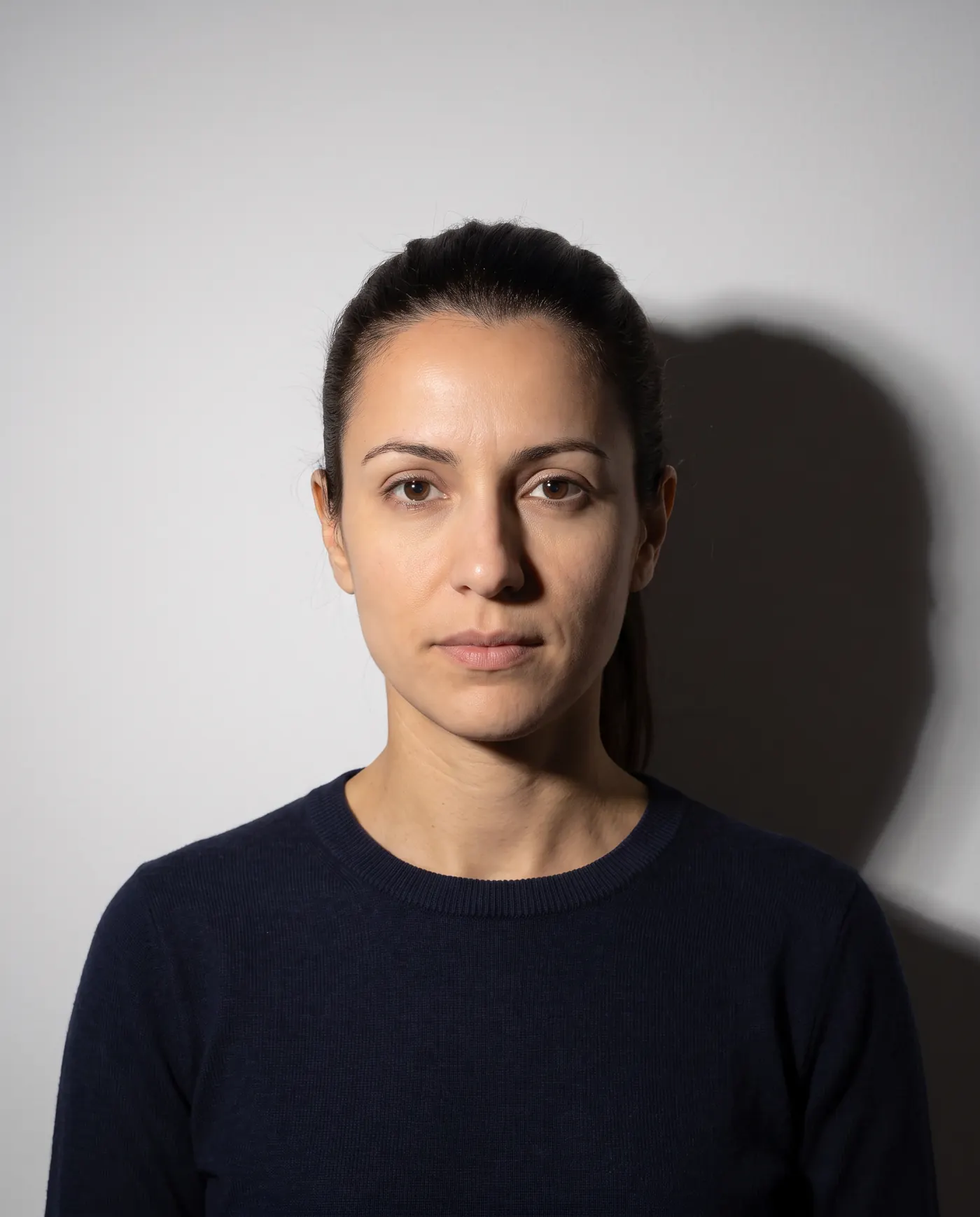 Rejected
 Accepted
- Size matches what your embassy or consulate lists, not what a blog says
- Taken within the last 6 months, showing how you look now
- Plain, untextured white or light background, no shadow, texture or lines
- Someone else took it, straight to the camera, you alone in the frame
- Printed on photo paper and glued to the form, name on the back if asked
- Photo retaken from your passport, licence or a group picture
- Filters, photo apps or edits of any kind
- A scan printed on plain paper, or a photo stapled or taped on
- Blurry, pixelated, or too small or large in the frame
- Dark or patterned background
Frequently asked questions
What size is a Japan visa photo?
The Ministry of Foreign Affairs' English application form says 45 mm x 35 mm, or 2 in x 1.4 in. Embassies do not all repeat that: Japan's embassy in India says 45 x 45 mm, New Zealand's says 35 x 45 mm, and the Chicago consulate accepts 2 x 2 in or 2 x 1.4 in. Use the size your own embassy lists.
Is a Japan visa photo 45x45 mm or 35x45 mm?
Both figures appear on official Japanese embassy pages, and the visa form itself says 45 x 35 mm. India's embassy states 45 x 45 mm with no edge. New Zealand's says a standard 35 x 45 mm passport photo can be used. The right answer is whichever the embassy handling your application publishes.
What are the photo rules for the JAPAN eVISA?
The JAPAN eVISA site says the photo must be taken within the last six months against a plain, untextured background, with the whole face clearly centred horizontally. Its FAQ lists JPG, PNG, GIF, BMP or HEIC files, up to 2 MB recommended, and says the image must fit the red frame on the upload screen.
Can I use my passport photo for a Japan visa?
For the eVISA, no: the site says not to use a photo retaken from a passport, driver licence or group photograph. For a paper application, the pages ask for a photo taken within six months, so a passport photo older than that does not qualify, and an office can ask for a receipt showing when and where it was taken.
Should the photo be glued or stapled to the form?
Glued. The Japanese embassy in New Zealand says to paste the photo on the form with glue, not to use staples or tape, and not to submit a scan printed on plain paper. The embassy in Serbia says a photo pasted digitally into the form will not be accepted.
Can I wear glasses in a Japan visa photo?
It varies by office. The Chicago consulate says to take your eyeglasses off. The embassy in Serbia rules out thick frames and sunglasses. Because the pages we read do not agree, remove your glasses unless your embassy's page says they are allowed.
Sources
- MOFA - Visa application form to enter Japan (English PDF)
- MOFA - The JAPAN eVISA system (electronic visa), dated May 15, 2026
- JAPAN eVISA - Online visa application for visiting Japan (Facial photo notice)
- JAPAN eVISA - Frequently asked questions (Q30 and Q63, photo requirements and upload)
- Consulate-General of Japan in Chicago - Tourism/sightseeing checklist (rev. 7/2026)
- Consulate-General of Japan in Los Angeles - eVISA requirements checklist
- Embassy of Japan in Canada - General visa
- Embassy of Japan in New Zealand - Visa FAQ (Q13, photo)
- Embassy of Japan in India - Photograph standards
- Embassy of Japan in Serbia - Standards for application form photo (2025)
- Immigration Services Agency of Japan - Photo specifications for applications
The Japan visa specification, with the official source of each value: Japan visa photo: exact size and free check
Keep reading
 Requirements
China Visa Photo Requirements: 33x48 mm Rules 2026
China visa photos are 33 x 48 mm on glossy paper with a 28-33 mm head; online uploads are a 354-420 px JPEG of 40-120 KB. Specs verified September 2026.
Read the guide Requirements
India Passport Photo Size and Rules for 2026
India passport photo requirements from Passport Seva's own instruction booklet: 4.5 x 3.5 cm, plain white background, and when you need no photo at all.
Read the guide Requirements
India e-Visa Photo Upload: Size, Format and Fixes
The photo India's e-Visa portal accepts: square JPEG, 10 KB to 1 MB, no glasses, plain white or light background, plus fixes for the upload errors.
Read the guide Requirements
UAE Visa Photo Requirements: ICP and GDRFA Rules 2026
UAE visa and residency photo rules from ICP and GDRFA Dubai: 3.5 x 4.5 cm, white background, width 35 to 40 mm, plus what neither publishes about uploads.
Read the guide Requirements
Vietnam e-Visa Photo: 4x6 cm, JPG Under 2 MB, No Glasses
What Vietnam's official e-visa portal asks of the photo: 4x6 cm, JPG or JPEG under 2 MB, no glasses or hat, white background, and what it never states.
Read the guide Requirements
OCI Photo Requirements 2026: Square Photo and Signature
OCI photo and signature specs from the MHA portal and VFS USA: square photo, pixel and KB limits, background, face size, and where the sources disagree.
Read the guide